personal

Card readers are the new camera bags…

©Neil Turner, December 2014. A small selection of the CF card readers that I own

©Neil Turner, December 2014. A small selection of the CF card readers that I own

As I sit here about to hit “buy” on yet another new reader for compact flash cards I am feeling more than a little bit of deja vu. And when I say “deja vu” I mean multiple layers of it. Sure I’ve bought plenty of CF, SD and even PCMCIA card readers in my time and of course none of them has been perfect but that feeling is an identical replica of the feeling I get when I buy a new camera bag – it’s a complex emotion; optimism meets resignation as I want to think that “the one” that I am buying is as perfect as I long for it to be whilst knowing full-well that it is going to be just as disappointing and just as deeply flawed as the last one, the one before that and the twenty or more before that.

It appears to be part of the psyche of professional photographers that we have to seek perfection in the equipment that we buy and use without acknowledging that such a thing doesn’t exist and that it probably never will. In just the same way that there is a colossal amount of choice in the camera bag market, there are lots of different CF card readers out there. Where the two markets diverge is in the quality of the construction and the longevity of the products. I have camera bags that have lapped the world and lived in more car boots than I can remember and that are still perfectly serviceable whereas CF card readers are cheap, poorly made and don’t appear to be of professional quality at all.

It isn’t completely the fault of the manufacturers: the pin design on compact flash cards isn’t as tough as you’d like and the way that the current crop of USB3 readers with separate cables  experience problems with the cable to reader connection would imply that it may be the USB3 standard that is at fault rather than the manufacturers quality control or design. This is backed up by the number of portable USB3 hard drives that are being reported as failing due to that same connection. It wasn’t always this way. I still have a couple of Sandisk Firewire 800 card readers that are as good as new despite having a hard life and being pretty much obsolete and the ancient PCMCIA reader that lives in a box in the loft was a proper professional bit of kit.

The accepted wisdom was that readers with removable cables were a good idea because the cables were the part of the kit that was prone to damage but that’s no longer the case. In an almost heretical move I am leaning towards the idea that built-in cables, avoiding the car crash that is the USB3 standard, are once again a good idea – and that is why my finger is hovering over the “buy” button because Delkin Devices have produced a reasonably solid looking USB3 reader with a built-in, chunky cable. Of course I’m resigned to the idea that there will be issues – this is one of those moments where optimism is high and the deja vu is strong.

Here goes…

Photography word of the day

For the past couple of months I have been posting a ‘word of the day’ using the hashtag #PWOTD on Twitter. Some of the words are merely triggers to allow myself to say something about photography and others pretty much sum up what I want to say in a single word. A few have links to other websites and quite a few link to old blog posts on here in the hope that some of the 250+ postings on here reach a few extra people.

After two months it is getting harder and harder to come up with a word every day (OK so I schedule the tweets up to three or four days in advance using Tweetdeck) and I was wondering whether anyone else had any suggestions?

Up until Tuesday 16th December 2014 the words so far:

advice   ambient   backup   bad habits   balance   bounce flash   byline   chimping   clients   colour management   compromise   confidence   consistency   contrast   criticism   default   destination   dusk   editing   empathy   experimentation   family   focus   genre   gutter   inspiration   interaction   juxtaposition   limits   manipulation   metadata   middle ground   mindset   monochrome   obsession   patience   people skills   personal   perspiration   photocalls   portfolio   preparedness   prime lenses   prioritise   professionalism  reaction   research   rules   self criticism   sensitivity   shadows   silhouette   simplicity   social media   teamwork   tripod   uniform   viewpoint   vision   workflow
If you’d like to see them then search the hashtag #PWOTD or have a look through my Twitter feed @dg28com . I’m probably going to take a break from doing the word of the day over Christmas – partly because I hope that everyone is going to be having a break from social media but mainly because I really hope that I am!

Pools of light technique from 2008.

Every time I post one of my old technique examples I get a massive spike in the visitor figures for this blog. Despite some of them being fifteen or more years old they still seem to attract quite a bit of attention. This one is being re-posted after a specific request from a reader and I’ve added a second photograph at the bottom for a little ‘added value’.

©Neil Turner/TSL, May 2008

©Neil Turner/TSL, May 2008. 1/180th of a second at f4, 200 ISO

I was inspired to share the “how” for this picture because of a comment from a colleague who said that I had been “lucky to find such a nice pool of light”. I was amused, annoyed and complimented all at the the same time because I created this light and he obviously thought that it looked as if it was a natural effect. Much of the best lighting looks as if it were not lit… so how was this one achieved?

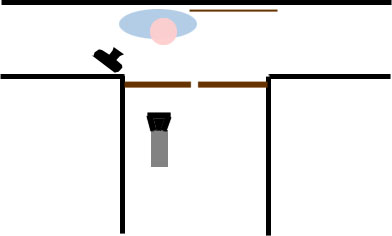
I had been asked by the picture editor to get a good range of portraits of this man who is the Vice President of a company that handles examination papers. The logo was needed in some frames and this plate screwed to a wall in a corridor was the only one on offer. The layout was like this..

Single flash the other side of the door

Single flash the other side of the door

The brown lines that you can see on the layout are fire doors – big heavy wooden doors with three small square glass panels in each one. The Lumedyne flash unit with a Pocket Wizard receiver on was placed outside the door and the door was closed. The subject was lit entirely by the hard, un-modified flash coming through those three glass panels. Lining up exactly where the light will fall is very easy – if the subject can see the flash head, then it can see them. After that it is just a question of shooting a couple of frames and judging on the camera’s LCD screen where the light is falling and then raising, lowering or moving the flash accordingly.

In this case the flash is about ten degrees above the subject’s eye line and he is looking almost directly at it. This allowed me to get the nice hard shadow behind his head and still have a reasnably flattering light on his face. I also tried to do a few rames where the ambient light in the corridor (see below ) was making the shadows softer but I much preffered the hard treatment.

©Neil Turner/TSL, May 2008

©Neil Turner/TSL, May 2008. 1/10th of a second at f4, 200 ISO.

Technical Stuff: Canon EOS1D MkII with a Canon EF16-35 f2.8L lens.

Late November afternoon in the park

©Neil Turner, November 2014. Playing football in the  park.

©Neil Turner, November 2014. Playing football in the park.

This is just another of those “just because I like it” photographs that I have added to my personal work folio on my Pixelrights account. The family had been out to breakfast and we went to the park for the youngest members to have a run around. I had my Fujifilm X20 with me and shot a few frames including this one.

For the technically curious amongst you, the black and white conversion was done in Photoshop with a 5% red layer added to the desaturated sRGB file to give it more body and depth.

Mint in box

©Neil Turner, November 2014

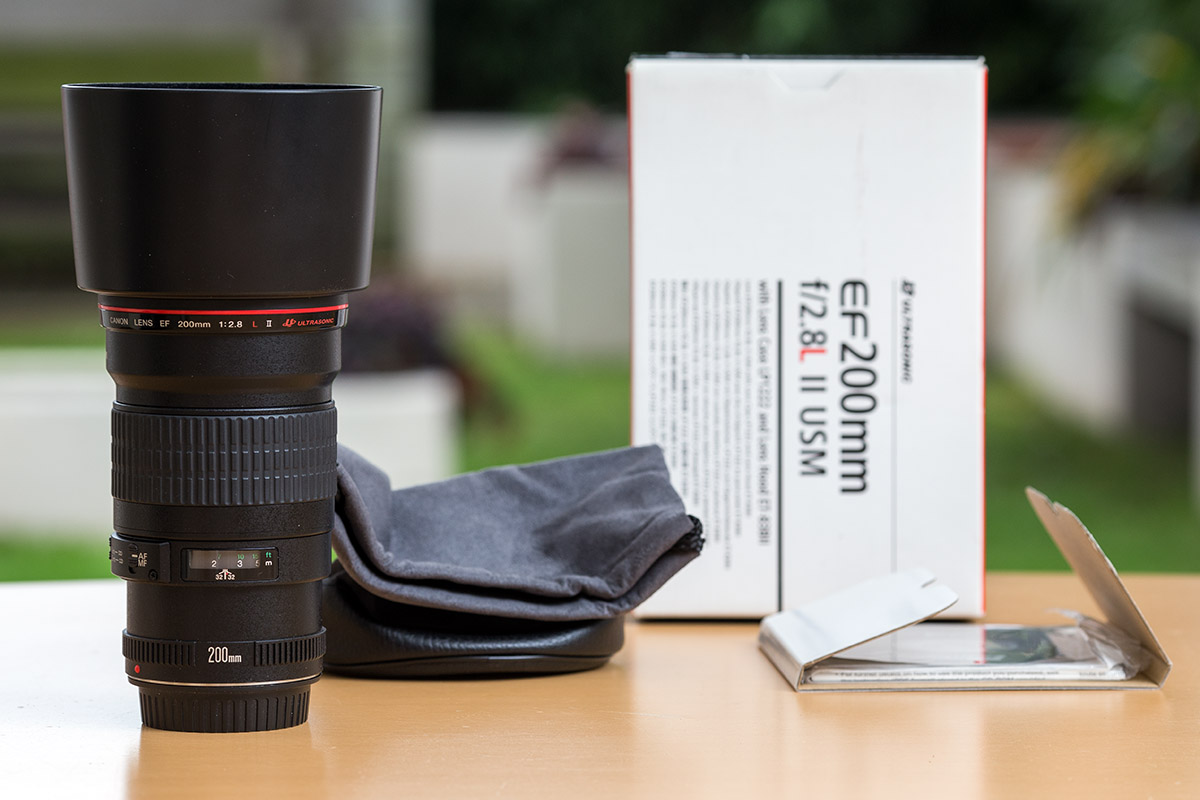
©Neil Turner, November 2014. Canon EF 200mm f2.8L II USM lens.

There are lots of things about the world that I don’t understand. Some of them I ignore, some I oppose and there are others that I just go along with.

One of those that sits squarely in the latter category is the obsession with keeping the boxes for items of photographic and computer equipment that you are intending to use. I go along with it because people are actually prepared to pay more for a used item if you have the original packaging. Basically, it appears, you are prepared to pay me a premium for a secondhand piece of kit if I keep cardboard, plastic and polystyrene in my loft so that you can do the same during your ownership of that item.

It makes sense for collectables where the market loves “mint in box”. We have a few Star Wars items safely tucked away still sealed in their original packaging and I have a couple of Corgi model cars in their boxes too (the box for one on my desk is actually more attractive than the die cast metal contents anyway). But the logic of hoarding packaging for something that is in use is beyond me. Again, I get the concept of saving the instructions and any accessories (I have a massive box full of both of those) but not the packaging. It’s no big deal which is why I am now going with option 3 and just accepting that it is just the way it is. No sense fighting against it and ignoring it isn’t much of a principled stand!

I wasn’t always of that opinion. Somewhere there’s probably a whole load of boxes being safely squirrelled away that look exactly like the original boxes for the items they were bought with but they are just substitutes. When I bought my first two Canon EOS5D MkII bodies a dealer bought the boxes and instructions from me. I thought it a bit weird at the time but £20.00 is £20.00 and I sold them. He presumably “re-united” those boxes with cameras that were missing theirs and sold them on to some unsuspecting soul who thought they were getting the original packaging.

I’m not even sure why this is taking up an hour of my time thinking about why I find it so absurd – other than the fact that I am getting rid of some superfluous gear and one of the lenses really is “mint in box”.

“What gear is that?” I hear you ask – it is a Canon EF200mm f2.8L II USM prime lens that I bought a few months ago when I was going through a phase of using prime lenses for as much as I could while my 70-200 f2.8L IS (ditched the box for that one in 2003) was away having major surgery. The repairs cost less than I had expected and in the end I only used the 200mm lens twice – both times indoors for large groups of head shots. I had bought the lens as secondhand myself although Castle Cameras did (which I trust) say that it had barely been used and had been originally purchased through them a few months before that. So here we have it; a fabulously sharp current model lens with all of the correct bits and pieces – including cardboard, plastic and polystyrene – which retails for £569.00 new going for the bargain sum of £449.00 + delivery.

I am loath to stick it on eBay given the massive commissions that they now charge but the average selling price for one of these (and it would be impossible to be in better condition) is £473.91 on the auction site. The lens is registered with Lenstag and so I would obviously transfer that over. By clicking on the link you can check that it is verified – such a good system!

I will be clearing some more gear out soon. None of it will be ‘mint in box’ because 99% of my equipment gets used for many years before I sell it on but it will be well looked after, properly serviced and verified by Lenstag.
Five day black & white challenge

©Neil Turner, November 2014. A young woman jogs along the promenade near Portman Ravine in Bournemouth with a child in a pushchair.

©Neil Turner, November 2014. A young woman jogs along the promenade near Portman Ravine in Bournemouth with a child in a pushchair.

A couple of weeks ago I was nominated by another photographer to take part in a Facebook Five Day Black & White Challenge. The idea was simple: to post a new black and white photo every day for five days. I have to admit that I was a bit reticent at first and posted pictures that I’d already taken in the previous few weeks. Then someone mentioned that they found the discipline of having to go out every day and shoot something new invigorating and so I started the challenge over again and shot specifically for it every day. My second challenge ended yesterday but it wasn’t until I was out shooting again today that I remembered that the challenge was over. What to do with the pictures from day six? The answer was to post the chosen frame to Facebook anyway and then to post it here too – as another “just because I like it” frame.

Technical stuff: Canon EOS6D with a 28mm f1.8 EF lens (cropped slightly). 160 ISO and 1/1250th of a second at f11 RAW file converted and desaturated using Adobe Camera RAW CC 2014 with a 5% bronze tint added.

After the storm

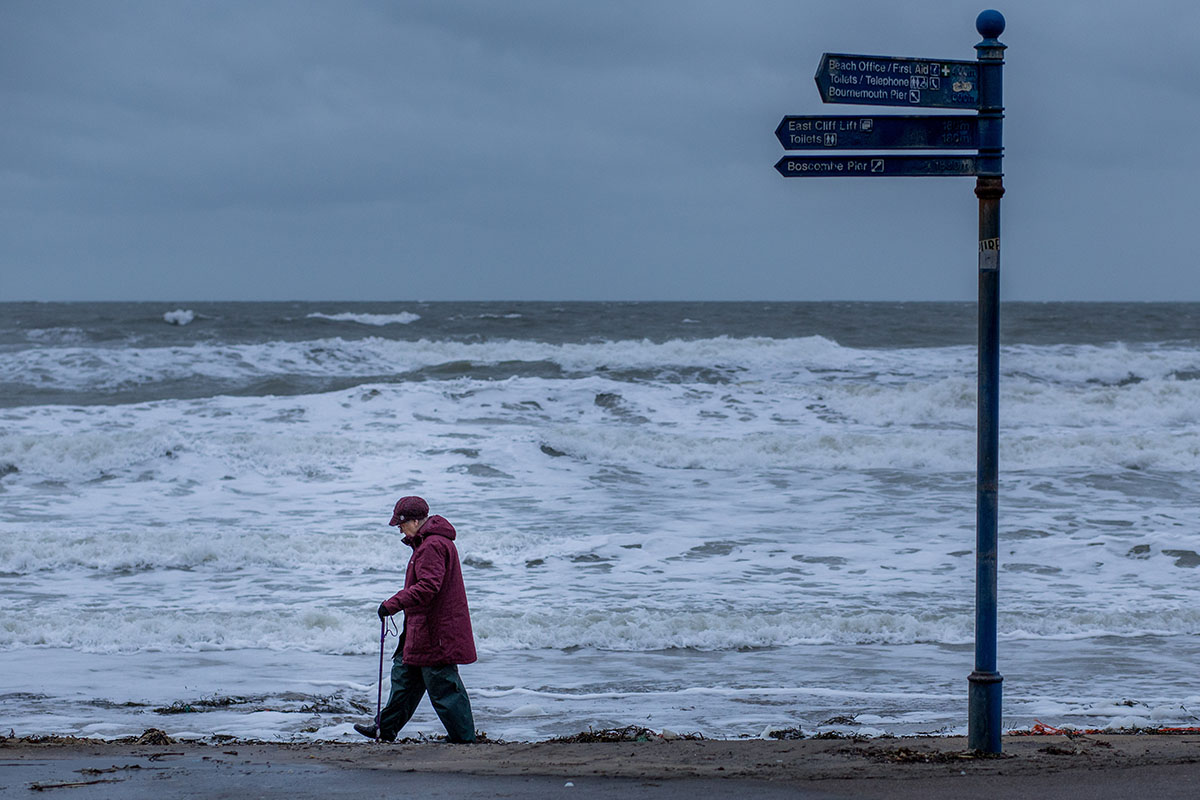
©Neil Turner, November 2014. A pensioner walks along the beach near Bournemouth Pier.

©Neil Turner, November 2014. A pensioner walks along the beach near Bournemouth Pier.

Following on from my post about zoom and prime lenses I was out with just the primes yesterday – walking along one of my favourite bits of beach in wild winds and failing light. I was just out having some photographic time before getting into the car for yet another drive up the M3 for work. This one was shot at 640 ISO at 1/1000th of a second at f4 with an 85mm f1.8 Canon EF lens on my rather lovely little Canon EOS6D – a camera that I am becoming increasingly fond of. When I’m doing personal work like this I tend to set the white balance to daylight and accept whatever colour cast I get and in this case it wasn’t far off of what the naked eye saw.

Remembrance Day 2014

©Neil Turner, November 2014. An ex-serviceman take a few minutes to himself at The Cenotaph in Bournemouth in the November sunshine ahead of the Service of Remembrance.

©Neil Turner, November 2014. An ex-serviceman take a few minutes to himself at The Cenotaph in Bournemouth in the November sunshine ahead of the Service of Remembrance.

Sometimes I just take a picture because it is there. This year’s Remembrance Day service at The Cenotaph in Bournemouth was well attended and held on a beautiful crisp morning. There were lots of proud ex-servicemen and women there along with the families and friends of those who survived, those who were killed in action and those who have since died. It is always a moving occasion and on the 100th anniversary of the outbreak of World War One it was somehow more moving than ever.