balance

Manfrotto umbrella bracket challenge

Photo: Neil Turner

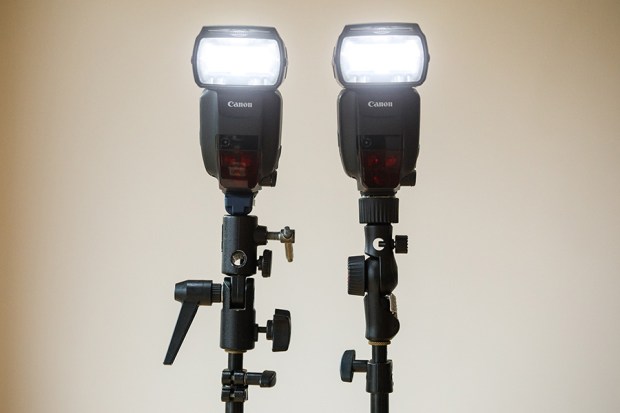
The old Lite-tite on the left and the Snap Tilthead on the right both with Canon 600EX II-RT Speedlites.

When, like me, you have been using a single product successfully for over twenty years it is normally out of a mixture of boredom and curiosity that you have to try out the next “new idea” when you see it. That happened to me a few weeks ago. Having owned and used several of the venerable Manfrotto 029 Lite-tite brackets for so many years I thought that I’d give their new Snap Tilthead with hotshoe a go. For my purposes they will do pretty much the same job: hold a Canon Speedlite flash on a stand with a folding umbrella on those jobs where using other lights isn’t so much of an option. I know that there are dozens of other brands out there but I’m a sucker for certain makes(more…)

Post production is all about the details

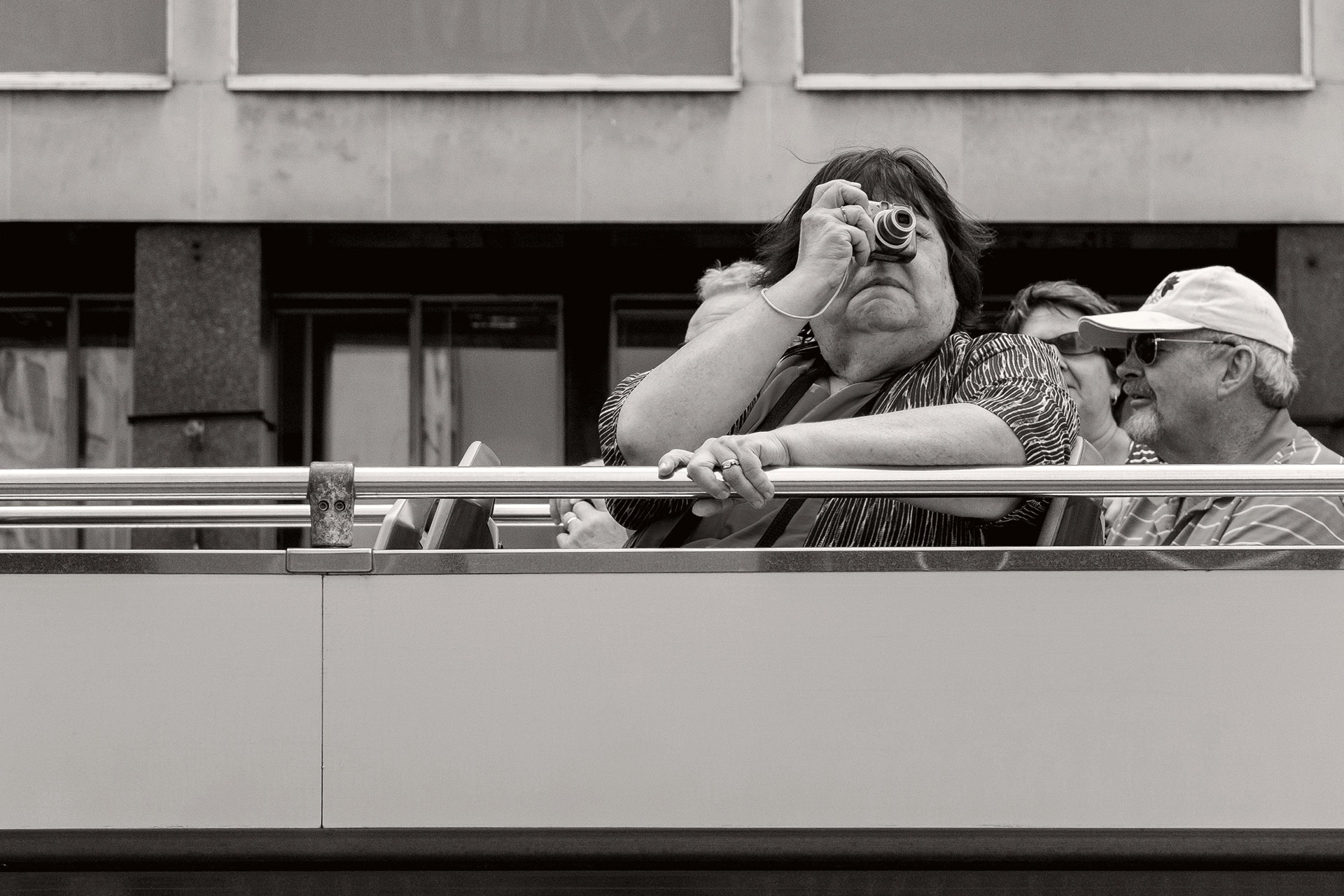
Passenger on the top deck of a tourist bus passing through Waterloo. © Neil Turner

Passenger on the top deck of a tourist bus passing through Waterloo.
© Neil Turner

I’ve read a lot about the ‘instagramisation’ of photography. I think that means taking slightly dull images, applying filters and presets to them and presenting them as bits of creativity. At the right time and in the right place those kinds of pictures have value and can make significant additions to creative campaigns and can go a long way towards making some elements of social media and social marketing more visually interesting. I’m not talking about that here – this blog post is all about choosing between making decisions about individual pictures or letting technology take over and ‘improve’ your work for you.

If you are on Facebook or any other social media that has targeted advertising you will probably get as many ‘suggestions’ as I do for people selling magical presets or add-ons to make my pictures instantly better. That’s great – or at least it would be if I wanted all of my images to exhibit a sameness with each other and with those of so many others. Trying to reduce professional post-production down to a series of mouse-clicks using algorithms and actions developed for others isn’t, in my opinion, a very good idea. (more…)

The story behind a picture #1

Young England cross-country runners posing for a photograph in Winchester. © Neil Turner/TSL

Young England cross-country runners posing for a photograph in Winchester. © Neil Turner/TSL

Even after nearly thirty years shooting photographs I can almost always remember something about ‘being there’ on the job when I look back at the pictures. There’s also a story to be told about why a particular picture was shot, lit or composed in a certain way.

A while ago I was posting a “photography word of the day” on Twitter and one of the first was compromise. This photograph of two rising stars of cross country running is a classic example of compromising to get a decent shot.

When I arrived at the college where they were both studying neither of them had their kit with them to do an action shot. Luckily their England team tracksuits had arrived and so I had to manufacture an action portrait of them that left one important part out of the frame – their feet. Neither of them had suitable footwear to be photographed in action and so I had to find a way to shoot them without drawing attention to their lack of running shoes.

In front of the college was a large banked area of grass and playing fields. I realised quite quickly that I could get the best of the light (dusk was fast approaching), lose most of the buildings and hide their feet by getting down low and using one of the banked grass areas to fill the foreground as they ran towards the low angled sun whilst shooting on a long (ish) lens.

So that’s what I did. The two runners were amused by the lengths to which I was determined to go to get a decent shot. They had been photographed two days before but just wearing their street clothes and standing by the college sign and they had assumed that I’d do the same. They did about ten lots of the ten yard run that had them in the right place and I shot some of them horizontally and the others vertically to cover the possible shapes that the newspaper might use. I also shot it using a range of aperture and shutter speed combinations to get the depth of field right.

I did some static upper-body photographs as well as having them pose with their trophies (feet hidden) on the grass.

Technical stuff: Canon EOS1D MkII with a 70-200 f2.8L IS lens. ISO 320, 1/1000th of a second at f6.7

Not the DSLR, I’m having fun

© Neil Turner, March 2014. Shadows on the pavement as a pedestrian passes along Tottenham Court Road.

© Neil Turner, March 2014. Shadows on the pavement as a pedestrian passes along Tottenham Court Road.

Question: Why are so many professional photographers using mirrorless cameras, micro 4/3rds format cameras and experimenting with pretty much anything that isn’t a DSLR?

It’s a tough question and without conducting some sort of major survey I can only give an answer based on my own experiences and those of close friends and colleagues. DSLRs have been my main cameras for over sixteen years now and they have become an extension of me when I’m working. They do what I need them to do with no real fuss, the quality has moved from “acceptable” back in 1998 to “extremely good” and they allow me to do the day job without having to worry about my gear very much. But, and there’s always a ‘but’ – they have become a little bit boring and little bit ‘too good’.

When I’m shooting pictures for the joy of it (and despite doing this for a living since 1986 I still do that) I want to feel something different. Elegant competence isn’t enough any more. (more…)

Hard light portrait

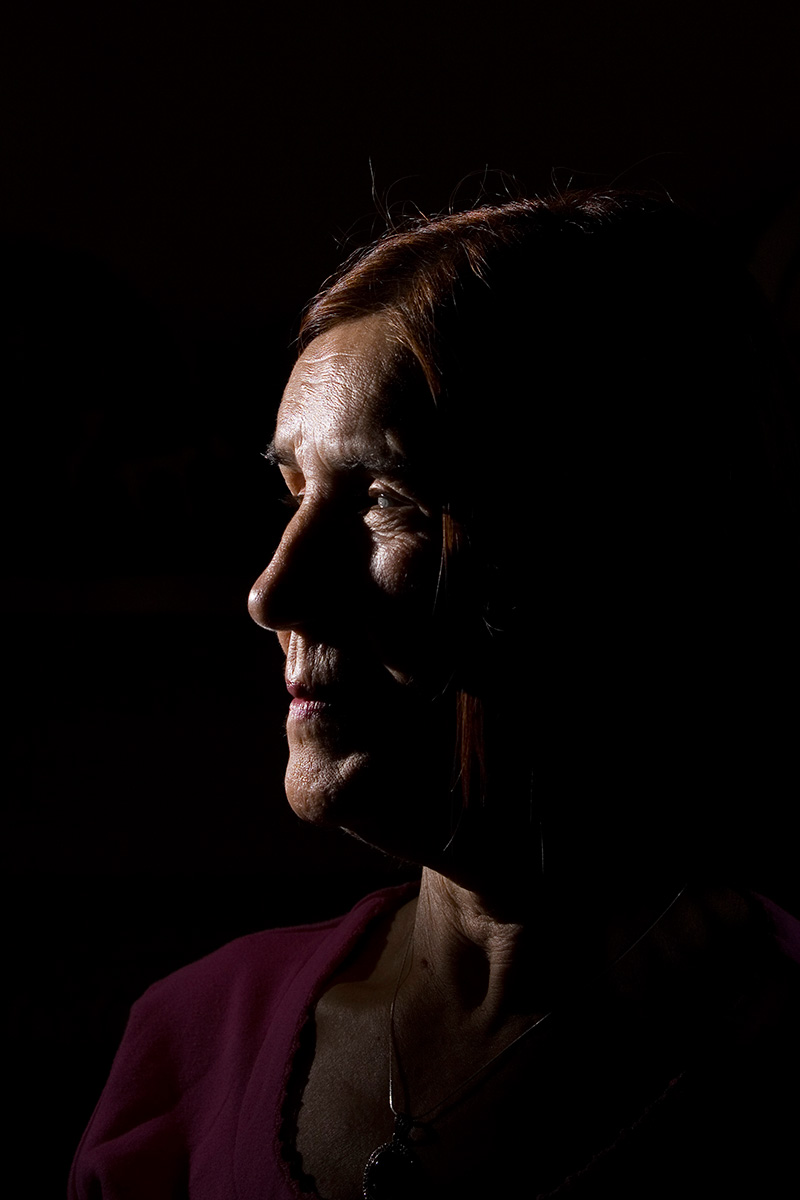
©Neil Turner/TSL, September 2007.

©Neil Turner/TSL, September 2007.

Not long after I took redundancy from my staff job at The Times Educational Supplement I spent several days putting together a collection of possible portfolio pictures. I was a long task as I’d been there for over fourteen years and when I eventually published my folio on line I had cut a couple of hundred photographs down to thirty. Whilst I was looking for something else today I came across that folder of 223 pictures and had a good root through.

Like most adventures down memory lane it reminded me of things that I’d forgotten and the story behind this picture immediately jumped into my mind. The lady in the portrait is a blind sculptor originally from Iran who was by this time married to a British teacher and living in south-west London. I have posted a portrait of her on this blog before when I discussed two surprisingly similar portraits that I’d made. This frame from the set has some of the harshest lighting that I’d ever used and it jumped out at me when I was looking today because I rarely use that kind of light any more. I guess that’s partly due to the nature of the clients I work for now – PR and corporates who don’t want anything as edgy as this was – and partly because my first instinct isn’t always to get the lights out any more. Even when I do light portraits I don’t mess around with the light as much as I once did. This goes with my Twitter #PWOTD which is TESTING

Techie stuff: Canon EOS1D MkII with a 70-200 f2.8 L IS lens at 70mm. 200 ISO 1/250th of a second at f8. Lumedyne flash.

After the storm

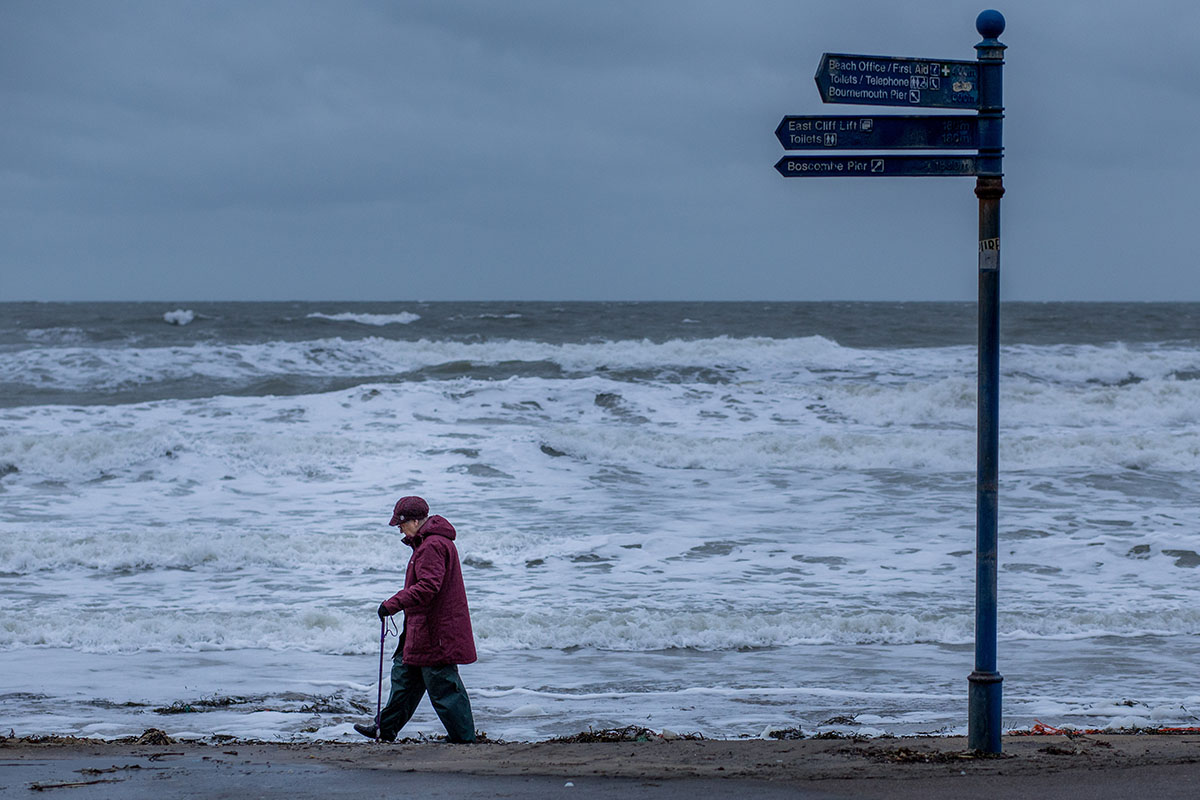
©Neil Turner, November 2014. A pensioner walks along the beach near Bournemouth Pier.

©Neil Turner, November 2014. A pensioner walks along the beach near Bournemouth Pier.

Following on from my post about zoom and prime lenses I was out with just the primes yesterday – walking along one of my favourite bits of beach in wild winds and failing light. I was just out having some photographic time before getting into the car for yet another drive up the M3 for work. This one was shot at 640 ISO at 1/1000th of a second at f4 with an 85mm f1.8 Canon EF lens on my rather lovely little Canon EOS6D – a camera that I am becoming increasingly fond of. When I’m doing personal work like this I tend to set the white balance to daylight and accept whatever colour cast I get and in this case it wasn’t far off of what the naked eye saw.

Empathy

empathy

As photographers we have a vision. We know how we want our photographs to look and we know what kind of response we are trying to encourage from our viewers and from our clients. When we don’t get the reaction that we were looking for or we don’t get any reaction at all then we have either got it wrong or we have a vision so unique that nobody else gets it.

One of the qualities shared by pretty much all of my favourite photographers is the ability to empathise. The best of the best can do it on just about every level too. They understand the feelings and motivations of those that they are photographing every bit as well as they understand those of the target audience. It doesn’t matter if that’s the doting parents of a newborn baby in a studio in the northern hemisphere or the parents of a critically ill child in the southern hemisphere – having the ability to imagine yourself into the position of those whose lives will be effected by your photography is a key skill. I find it hard to think of a genre of photography where empathy wouldn’t be right up there with an understanding of composition or light as a piece of the jigsaw that comes together to make us ‘photographers’.

Somebody reading this is gesticulating at their screen and shouting about being single-minded and determined and not letting emotion get in the way of doing a good job and they have a valid point. Having empathy doesn’t always mean that you have to act on it. There will always be situations where you have to put your ability to understand everyone else’s needs and desires to one side and shoot the pictures that you need to shoot in the way that you need to shoot them but the great photographers – even the single-minded great photographers – have empathy.

If your are finding it hard to agree with this idea then I’d ask you to look at some pictures and try to work out whose feelings, needs and desires the photographer concerned might have been taking into account and/or ignoring when they shot them. I would hazard a guess that the pictures that have the most impact will be those where empathy is a factor and those that are just eye-candy are those where empathy isn’t a big part of the formula.

You learn something new every day

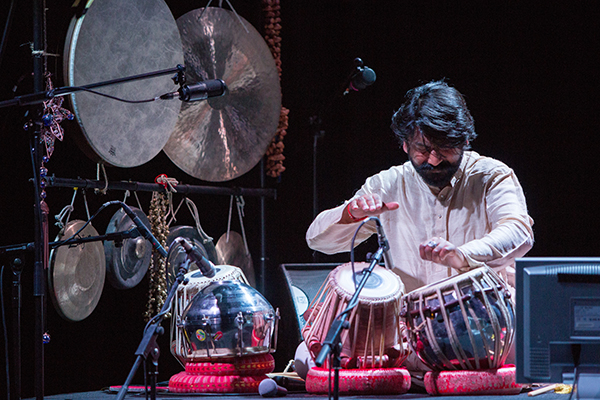
It is one of the universal truths of photography that you never stop learning. Almost every time you pick a camera up something happens that you squirrel away in your memory banks that will make a difference to how you shoot something else at some time in the future. Normally these are small things but this week I was shooting the wonderful Talvin Singh performing at an arts festival and something happened that made me scratch my head because I’d never experienced anything quite like it.
©Neil Turner, October 2104

©Neil Turner, October 2014

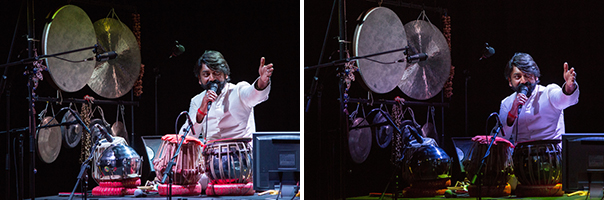
The two pictures above were taken within a fraction of a second of one another under ‘exactly’ the same lighting without flash and with identical settings (manual everything apart from focus) on the same camera with the same lens and have been processed through Adobe Camera RAW identically. So why are they different? The answer seems to be LED stage lighting. You might conclude that both pictures are ‘quite nice’ and move on but that’s not really an answer when you are shooting something that has a moment that you absolutely have to capture. I’ve had issues with un-balasted HMI lighting and of course strip lights but this was in another ‘issues league’ entirely.

It appears that these brand new lights installed in a state-of-the-art theatre are an absolute nightmare for stills photography. Now that I’ve experienced this, I have been reading up on it and it seems to be a known phenomenon where the lights cycle between the red, green and blue LEDs in the light at a speed that the human eye chooses not to detect but that a camera shooting at shutter speeds of 1/125th of a second or higher has a real problem with. The higher you go, the worse it gets. Of course you could shoot at 1/60th of a second and all would be reasonably well – apart from any movement being a little/lot blurred.

Being a complete anorak I decided to shoot a series of tests at an even higher shutter speed (having first racked the ISO up a way) to see what happened:

©Neil Turner, October 2014

©Neil Turner, October 2014

That makes shooting under these lights at the kind of shutter seeds you need to freeze action nigh on impossible. Once I had realised that there was an issue I dropped down to 1/100th of a second and then to 1/80th and shot lots of frames. The first five frames above were shot at 1/400th and the last one was at 1/100th – what a difference.

Most of what I have read about LED stage lights concerns white balancing – well that was the least of my worries here. It was almost as if shooting with shutter speeds in excess of the cameras maximum flash synch speed (the highest speed at which the entire chip is exposed at the same moment) was part of the problem. The LED stage lights in this theatre were effectively pulsing or flashing and the only way to get a consistent image was to work with that pulsing and use shutter speeds below the maximum flash synch. I have read something on what appeared to be a well-infomed website which implies that this only happens when the lights are dimmed – which makes some sense. I haven’t got enough experience with this to work out whether the speed thing is a coincidence or whether it is directly related but I now know how to shoot in this one venue with these lights.

Shooting with shutter speeds that are a long way below “ideal” some of my pictures were sharp and many weren’t – but the job got done. Constant reference to the screen on the back of the camera is frowned on by a lot of people but this case proves that there are times when it is exactly the right thing to do. Imagine having had to shoot this on film with no LCD…

Presumably more and more theatres and venues will use these lights and the problem will grow. Maybe there’s a solution out there already?

©Neil Turner, October 2014.

©Neil Turner, October 2014.

Techie stuff: Canon EOS5D MkIII with a 70-200 f2.8L IS Canon lens. 1/100th of a second at f3.2 on 2000 ISO. WB set to daylight but adjusted in Adobe Camera RAW removing quite a bit of magenta and adding a small amount of yellow.