Editorial

Five years of freelancing

cutoutsIt’s quite hard to believe that I’m celebrating five years of freelancing this week. I hinted at it when I wrote about anniversaries a couple of weeks ago and I thought that it might be a good time to think about how things have gone and how things are going.

The first thing that comes to mind is that I still adore being a photographer. I hope that anyone who has read any of my blog posts since 1999 would have worked that out for themselves but I wanted to get that in first just in case anyone is in any doubt.

The second thing is that the timing of my move into self-employment couldn’t possibly have been worse: the economic meltdown in much of the developed world was pretty much at its zenith in September 2008 and I’m pretty sure that life would have been considerably easier had I left the staff job a couple of years earlier. That’s life.

Thirdly I want to mention the way that our industry works. Every photographer, picture editor and buyer of photography will tell you about a golden era. I really think that no such thing actually existed. That’s not quite right; I think that the invention of photography spurred a “silver” era which is still in progress and that there may have been a few golden spikes in that time. The industry has been in a constant state of change for well over a hundred years and it will continue to react to social and technological changes as long as the need for imagery exists.

So how has the last five years actually been for me? Ups and downs, feast and famine, peaks and troughs are all phrases that readily come to mind. One week I might work one day and the next I have four or even five days work. Sometimes it’s all editorial and others it’s all corporate. I’ve calculated that I’ve made 88% of my income taking pictures and the other 12% either writing about photography, teaching it or doing some consultancy work. I’ve learned the importance of having a portfolio ready to go and I have recently spent a lot of time getting my online presence to work smarter for me.

I suspect that none of the above is new to you and that none of it comes as a surprise. To be honest, I am pretty content with my new life and the only things I actually miss about being a staff photographer are:

  • I now have to buy my own car and camera gear
  • I have to do my own paperwork
  • I’m no longer an integral part of a big team.

The variety of assignments has been great, the travel has been interesting and getting to spend a lot more time at home has been wonderful. My hair has lightened to an even lighter grey but that is probably more to do with age than stress and I now have to wear glasses a bit more often than I did but that’s probably due to my age as well.

I’m not the only one who has made the move from staff to freelance and I’m certainly not the only one who did so due to newspapers and magazines reorganising and doing away with staffers. There was a discussion a few days ago about the pros and cons of being freelance and the general consensus was that it suits some people more than it suits others. I miss the team, I miss shooting every single day and I’d love to have someone there to buy me some new gear but apart from that I’m looking forward with child-like excitement about what comes next.

Neil Turner Photographer, the Facebook page

What kind of photographer are you?

© Neil Turner, August 2013. Evening light from London's Tower Bridge. From my EyeEm feed.

© Neil Turner, August 2013. Evening light from London’s Tower Bridge. From my EyeEm feed.

When you are introduced in a social situation as a ‘photographer’ there is almost always a follow up which will vary from “do you do weddings?” via “what kind of photographer are you?” to “I take a lot of pictures myself”. How you respond to these various questions and comments says a lot about you.

There was a time when I got quite annoyed that so many people automatically equated professional photography with wedding photography and it didn’t help that I wasn’t a huge fan of the work most wedding photographers were doing.

That has literally all changed. Fewer people automatically assume that I must shoot weddings at the same time as the quality of the best wedding photography has gone from quite good to extraordinarily good. It is inexcusable, not to mention counter-productive, to get worked up about people not understanding a job market as complex as photography when the only professionals that the majority have met are high street portrait photographers and wedding photographers.

My annoyance has gone away (that could of course be my age showing through) and been replaced with a desire to educate as many people as I can about what makes a professional photographer different from a person with a nice camera. I’ve had a go at defining professionalism on this blog before so I want to visit my notions of myself as a photographer:

What kind of photographer AM I?

This is an exercise that we should all do no matter what we do for a living and no matter how we have described ourselves in the past. Every website, social media platform and discussion forum that I appear in has some form of description of me but they vary subtly from one to another. For example, on the EyeEm photo sharing site I have been using this;

Middle-aged editorial photographer still obsessed with taking pictures for fun, for a living and for posterity

Whereas on my AboutMe page I use the following;

Middle-aged editorial & corporate photographer, still crazy about pictures after all of these years

And then on LinkedIn – which I regard as the most important and most serious of the social media platforms for work I use a much longer description;

Freelance photographer based in the south of England providing editorial and editorial style photography to the media industries. Features, portraits, case studies and documentary style work for newspaper, magazine, commercial, PR and NGO clients

On the one that matters, I don’t mention my age and I don’t try to be even remotely witty or self-depricating. Horses for courses. Encapsulating who you are and what you do in one line is a lot easier when you have time to think about and when it is written down. I have lost count of the number of people that I’ve met in situations not directly connected to finding work as a photographer who have gone on to provide me with work. Your social media presence, your website or your blog are important shop windows and it is very important to have good and concise biographies available for those who want to know more. It’s important to keep them up-to-date and professional and that is something we all need to work hard on. Responding in person in a social or business setting is a lot tougher unless you give it a great deal of thought and have a few reasonably well rehearsed (without sounding glib or insincere) answers up your sleeve. I say this because it does matter.

So what are the options?

  • You can come up with one or two simple descriptions of what you do that rolls off of the tongue and says exactly what kind of professional you are.
  • There is an option to have a slightly less perfect description that invites further questions to which you have good answers that will lead into a proper conversation rather than you just giving a straight answer to a straight question.
  • It’s very easy to have some rather more enigmatic answers that give hints to what you do for a living but that have the goal of really dragging the other person/people into a detailed analysis of you and your work.
  • Finally you might want to deflect the question altogether – sometimes you meet people who aren’t interested in you and just want to talk about themselves and it is often easier to give them permission to indulge in that. Similarly there are occasions where you meet people who have a camera around their neck and who want to bore you rigid with their questions about the minutiae of photography.

Once you have been in this business for enough years you tend to make snap judgements and use an answer from any one of the four bullet pointed categories above as the situation demands. That isn’t always easy and so my default position is the second option – the imperfect description that invites conversation. The question can be phrased in far too many ways to work out an exact response for each one but my stock response would be something like;

“I make 90% of my living as an editorial and corporate photographer”

That gives them a chance to ask for definitions of editorial and corporate, to ask who my clients are and to ask how I make the other 10% of my income. I guess that there is a hint of ‘enigmatic’ in that answer but it mainly gives me a chance to assess their response and to line up some good descriptions and the odd anecdote. This is basic conversation and we all have conversations all of the time but I’m a very strong believer in responding professionally to enquiries about my profession.

To me, editorial photography is anything used in a newspaper or magazine, on a website or in a video to help to tell or illustrate a story. The pictures should have been shot as a third party where the person paying you doesn’t have a direct relationship with who or what is in the photographs. I also shoot a lot of PR and commercial pictures in an ‘editorial style’ where I use the same styles and techniques of lighting and composition but where I am being paid by someone who have a personal or business relationship with my subject. My corporate work is very similar but isn’t intended for use in an editorial context. The corporate stuff might be for a brochure or an annual report – a blatantly non-editorial context.

You can see that I have spent quite a bit of time thinking about this stuff. It’s important. At a time when the amount of work out there hasn’t increased with the number of people chasing it and when prices are under constant pressure because of supply and demand you have to have some clear ideas and visions about where you want to be, where you are perceived to be and how to marry those two often conflicting views. As time moves on, your own attitudes and positions change as well and you need to be able to give articulate responses to questions because more than ever before everyone you meet is a potential client or knows someone who is.

Because I make 10% of my income without a camera in my hands – something that has come into being in the last five years – I also have to have simple descriptions of what that entails. That, weirdly, is a lot tougher than describing how I make the 90%. Simply put – I teach, write about and consult on editorial and corporate photography. I am at pains to stress that whilst I love having the variety my heart remains with taking pictures and that my value to clients as a teacher, writer and consultant is vastly increased because I’m still a practitioner.

Quite how many social situations allow you to get through the whole script is a whole other blog post. You have to obey the social conventions and be interested in other people too. How easy that is depends on who they are and how engaging they are – exactly what they were thinking about you.


Having a gutter mentality

OK so it’s a deliberately eye-catching headline and, unfortunately, this blog post is about composing photographs for use in newspapers and magazines rather than anything X-rated. In publishing the ‘gutter’ is the fold or join between the two pages across a spread. It might be pages two and three, four and five or any other combination through thirty-four and thirty-five to the end of the publication. As photographers we have to handle those spreads carefully because there is always a chance that a badly composed or laid out picture can lose a lot of its impact through an important detail disappearing into the gutter. Experienced photographers and thinking photographers always go out of their way to give designers as much flexibility as possible to use their pictures across a spread without losing those important details.

How the pictures look

Here is an example of an image and how it was used. It’s not the greatest picture that I have ever taken but it is a very good example for the purposes of teaching – something I’ve used this picture for many times. You can see where the gutter lies – halfway through and that there is a single column of text on either side of the cropped picture. The designer could easily have laid the page out with two columns of text in white on the darker background or two columns on either the left or right of the spread – they had plenty of choice. That, to a large extent, is because the photograph was shot with design in mind.

6-003

Space on either side of the image with interesting but unimportant detail makes this an ideal editorial photograph in terms of composition. It could even have been cropped to a single page vertical if the layout hd called for the. Arguably it would have been a shame, but that’s the way it sometimes goes. You’ll also notice that the designer has taken advantage of a large dark area within the image to run a headline. Purist photographers hate having their work used (and they’d argue abused) in this way but I am happy for it to happen as long as it doesn’t trample the important details that I have mentioned previously. Put simply, shooting pictures more loosely than you might otherwise do nearly always gives designers more options.

When I’m teaching editing and workflow to other photographers I often see them cropping their images to perfection. The fact that those crops rarely coincide with the shape of the page and the fact that even if they did coincide things often change is something that I spend a lot of time talking about. The only times you get to crop your images exactly how you want to see them are in a) your self-published book and b) your portfolio. Photographers that want to get used over and over again by the same clients provide options and that means a range of pictures many of which have a strong element of flexibility about them.

I absolutely love shooting for editorial clients. I also love working for corporate clients who like to use images in an editorial way. That means that I have to think about what the designers and sub-editors might want to do with my pictures every time I have the viewfinder to my eye. When I was first starting out that was one of the steeper learning curves – easily as tough as correctly exposing transparency film and focusing manual lenses. Twenty seven years on, it has become second nature.

Social media … is it working yet?

A little over two years ago I wrote a blog post about social networking where I asked largely rhetorical questions about whether there was a point to it, which platforms were the right ones and whether or not it made any difference. About three weeks ago I wrote on Twitter that I’d spent half a day integrating my social media – getting my Tweets to show up on LinkedIn and getting my photos posted on EyeEm to show up on Facebook and then getting every single platform to react to one another when I wanted them to. Not only did I set all of that up on the desktop and laptop computers but I also did it on the iPad and the iPhone. Boy, am I ever integrated now!

This morning I added a post on a LinkedIn group about explaining to reluctant businesses why they should be using social media:

“The simplest way to explain it to the doubters is to point to the utter stupidity of NOT using social media in the world in which we currently live. You didn’t need it ten years ago and theres’ a chance it might be past it’s best in ten years time but right here, right now it is the method chosen by a massive proportion of the population for making choices, doing research and engaging with business.”

So… is social media working yet? You wouldn’t expect me to give a clear and unequivocal answer to a direct question that I posed myself would you? Of course not – except there is an answer that I have given a few times when talking about this:

“It isn’t not working”.

How do I explain that? I’d be worried if social media was having a negative effect on my business and career but I have been really careful to avoid the stupidity of posting banal, overly-personal or critical observations on any platform unless they were going to have a positive effect – which is almost never. On a few closed Facebook groups I might be a little less guarded and in private messages I might use the odd bit of cussing but on the whole my social media profiles have been kept clean. That has meant very little controversy, relatively few spikes in activity and a lower profile than I might have gained had I been happy to upset a number of people. That’s all OK but why would I imply that all wasn’t well with social media? Well, the hours spent plugging away haven’t been directly rewarded with more business and it would be hard to quantify the actual benefits of getting out there in the worlds of social media. So in the two years since I first blogged about this I have got a lot better at doing it, gained a few jobs here and there and generally promoted myself positively. I’m going to keep on doing it because I genuinely believe that to avoid social media is a very bad thing.

The irony is that this blog is the one thing that I want people to see, read and interact with. That’s my strategy and that’s why I wanted to get the integration going – the other platforms are there to boost the blog and the blog is there to raise my profile. Whether or not that circle is vicious or virtuous is something only others can decide upon.

©Neil Turner, May 2013. First seen on EyeEm - there are so many ways to promote your business these days!

©Neil Turner, May 2013. First seen on EyeEm – there are so many ways to promote your business these days!

Customers Vs Clients

© Neil Turner, July 2013. Fisherman's Walk, Bournemouth.

© Neil Turner, July 2013. Fisherman’s Walk, Bournemouth.

Today is my first proper day back at work since a long overdue holiday. I will write a little more about our time away when I do a further Fujifilm x20 update but in the mean time I am writing a few new lesson plans for my next bout of teaching. The first one that I decided to tackle was about business or, more specifically, the business of editorial and corporate photography. Every single colleague who works in these areas handles their business lives differently but there are a few basic truths that are there for everyone.

What is the difference between a customer and a client?

It’s subtle but it’s important to be able to differentiate between the two, no matter what business you are in. A customer is someone who buys your wares or services. When you go into Tescos or Wal Mart (depending where in the world you are) you pick up a few items, stick them into a basket and pay for them before leaving. You are one of a few thousand people who will do much the same thing in that store on that day. You are, or were, a customer. As a professional photographer I might pick up the odd customer but I don’t have a shop and I don’t get much “passing traffic”.

What I need is clients. A client works with you on a regular basis and there is a definable business relationship between you. They do far more than dropping a print or a JPEG file into a basket. There are, obviously, business models in the photography industry that work exactly that way but it would be tough and rather less than fulfilling if I were to think of the people who pay me merely as ‘customers’. A client needs to nurtured, convinced that they are buying the right services and looked after. I might have twenty clients at any given time and everyone who I deal with is a potential client and not just a customer.

In the field of photography that I love working in long-term symbiotic relationships are what I need. I am happy to say that I first worked with one of my current clients in 1987 and that my next three assignments are all for clients I have had for at least four years. I have a few jobs booked between now and Christmas that have become annual fixtures in the diary and that is a great feeling: clients who come back time-after-time. It’s funny though because whilst shooting a job for a new client a couple of weeks ago I acquired a customer. A corporate executive that I was shooting a portrait of wants to buy a print from the session. I don’t think that he will ever become a client (although I’d love to have his company as one) but he makes a rather useful customer.

So, what is the difference between a customer and a client? Let’s try this;

A customer is someone with whom you trade whereas a client is someone with whom you work.

If you have a definition that would be better in the context of editorial and corporate photography, I’d be very happy to hear it

Big soft light on the cheap

This technique example was originally posted on the ‘pre-blog’ in January 2009

A lot of portrait photography is done with large soft boxes or large umbrellas. The point there being that large light sources give a certain type of soft light that is reasonably flattering, nicely even and pretty good to work with. Bouncing a flash off of a big white wall gives a very similar effect to a large soft box which makes a big pale wall on location a very useful thing.

eaton-054

©Neil Turner, November 2008. Bournemouth, Dorset.

Shooting this portrait of a couple who met and fell in love in later life gave me a few challenges. The picture editor wanted them to be photographed on the beach in my home town of Bournemouth but the weather forecast for the late November morning wasn’t too promising. Having spoken to the couple we decided to head for a location which offered us plenty of parking right near the beach front as well as wide open expanses of sand. The plan was to shoot on the beach and head for one of the local cafes if the rain came. The same stretch of beach also has some covered seating areas, which were to prove very useful.

We started off shooting on the sand but moved pretty quickly under the covered area that you can see to the left. It was out of the wind and out of the rain that was looking likely. The theme for the picture was to be mildly romantic and the strong arch was likely to be useful.

I was shooting with a Canon EOS 50D and 16-35, 24-70 and 70-200 f2.8 L lenses. The lighting was a Lumedyne 200 watt/second pack and Signature head triggered with a pair of Pocket Wizards. The back wall of the covered area was painted with a very pale cream/lemon colour so I decided to bounce the flash off of it.

I mentioned above that the effect is similar to a large soft box and the area of wall illuminated by the flash was about four square metres (a little over ten square feet) which is a big soft light by anyone’s standard.

Looking at the brilliant LCD on the back of the camera after a couple of test shots, it was obvious that the colour of the wall was a little more yellow than was apparent to the naked eye. I shot a frame with a piece of white paper in the man’s hand so that I could do a custom white balance. The net effect of this was to send the daylight behind them and any areas lit by the ambient a little blue – not an unpleasant effect.It was clear that they were enjoying being photographed and were happy to indulge my usual technique of playing around with lenses, compositions, exposures and lighting positions.

I was trying to shoot with a wide lens under the cover and the shot that you see above was taken with my 16-35 f2.8L right at the 16mm end. I usually try to shoot at 200 ISO and the meter reading for the sand and sea behind the couple was 1/125th of a second at f5.6. I altered the output on the flash to give me f5.6 on the couple and changed the shutter speed to 1/180th to marginally underexpose the background. The available light reading on the couple would have been 1/30th at f5.6 so they were lit exclusively by the flash. I shot a lot of different images with similar compositions before changing over to a 70-200 f2.8L IS lens.

I moved my subjects so that they were leaning in the entrance just as the light outside was getting a bit better. By the time I shot the image below the shutter speed was up to 1/250th of a second but not really underexposing at all.

©Neil Turner

©Neil Turner, November 2008. Bournemouth, Dorset.

The ambient light was starting to affect the man’s head and you can see that he has a gentle blue highlight on top of his head. The light balance was just right for about two or three minutes before the ambient became brighter and I had to increase the power on the flash to maintain the balance.

After a few dozen frames we moved back onto the beach where we shot several more ideas. The magazine eventually ran a picture shot on the beach as the day turned brighter and it came towards midday. In the two pictures shown above I am looking almost due south where the midday sun would be. The second picture was taken only 45 minutes before noon and so the reasonably heavy cloud was a real help to make this picture work.

The whole shoot took a little over an hour and the edit took about the same amount of time before I sent the magazine around forty pictures.

New work – an answer

A few weeks ago now I posted an open invitation for anyone to ask me a question. I received a few and saved some of them until I was ready to answer them. This one has been playing on my mind for quite a while:

“Why don’t you post new pictures on your blog in the way that you used to when dg28.com was the first website I looked at every week?”

That is what I call a question! There are so many parts to the answer that I have decided to list them as bullet-points:

  • I don’t shoot as much editorial work as I used to and a lot of corporate clients don’t want me to post the images shot for them.
  • I don’t have quite as much time to work on websites as I used to.
  • One of the main reasons that I stopped posting new work was that much of it stopped looking ‘new’ and I wrote about that on this blog.
  • Another reason that I stopped was the number of times people asked me to take pictures down.

Now that I am a freelance photographer I need to be very careful about what I post. Social media, blogs and websites are very public forums for thoughts and ideas and it is far too easy to do or say something that harms your business and freelancing as a photographer is very much a business. There’s also an element of protecting ideas. I published fifty technique examples in the period between 1999 and 2008 and I get emails from photographers all over the world saying that some of those lessons changed their practice. I still meet photographers who tell me that they read those pages over and over again when they were trying to develop their own techniques for using portable flash and that is gratifying but now I’m playing a few of my cards a bit closer to my chest because I have developed a few new ways of working that I’m not ready to share outside of my portfolio.

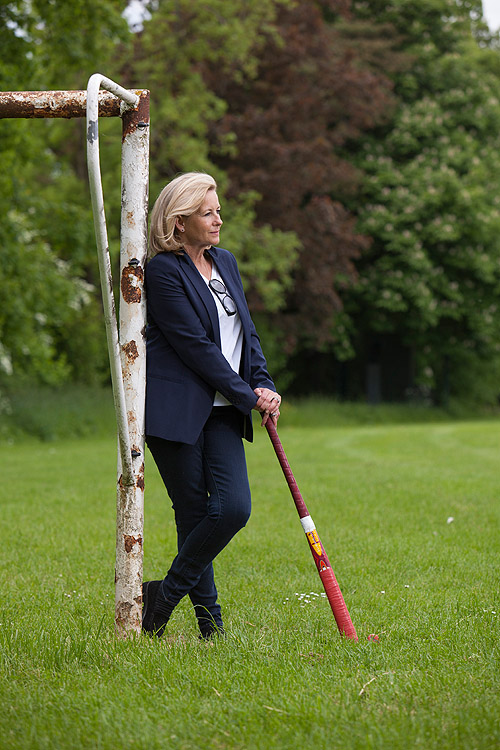
Like I said – there’s no single reason why I stopped posting and I certainly don’t rule out posting some more ‘new’ work over time. As a response to the question that was asked I have decided to post one new portrait that I made a couple of months ago for a women’s magazine. Te story was about three women who had written very personally about their time at school and how that had influenced their later lives. One of the women was journalist and author Gill Hornby and I was asked to photograph her with her dislike of school and team sports in mind. We had a few minutes at a playing field on a less than sunny day and this is the photograph that I liked most:

©Neil Turner. 07 June 2013. Gill Hornby is the author of The Hive (Little Brown).

©Neil Turner. June 2013. Gill Hornby is the author of The Hive (Little Brown).

Anniversaries

©TSL. July 2004. Nine years ago this week Canon delivered my first EOS1D MkII. I shot for the first time with it on a job where staff were using acupuncture in a Sussex school to help boys with their behaviour.

©TSL. July 2004. Nine years ago this week Canon delivered my first EOS1D MkII. I shot for the first time with it on a job where staff were using acupuncture in a Sussex school to help boys with their behaviour.

I woke up this morning to the headline news that it was Nelson Mandela’s 95th birthday. It is also my next-door-neighbour’s 50th birthday and my nephew’s partner is having her birthday celebration this evening as well. I started to think about things that had happened on (or near) this day over time in my life and I came up with a few:

  • 18th July 2012: I was working as a member of the Photo Operations team at the London 2012 Olympic and Paralympic games. I have written before about just how exciting, tiring, inspiring and memorable it was but with the first anniversary athletics event about to happen those memories are coming back as strongly as ever.
  • 18th July 2011: I was coming to the end of the very first cycle of the NCTJ Photojournalism course that I help to teach at Up To Speed in Bournemouth whilst shooting a wide range of both editorial and corporate commissions. That was also an exciting time but for very different reasons.
  • 18th July 2010: I was shooting mostly corporate photography and things were starting to go quiet for the summer months. Really quiet as it turned out.
  • 18th July 2008: I was still employed as a staff photographer at TSL and I spent the day shooting a lovely set of pictures at a school in Hertfordshire that had spent a small fortune making their new building and the grounds as environmentally friendly as possible. I was still unaware that two weeks later I’d be called into a meeting with the Editor and the HR Director to be told that they were making me redundant.
  • 18th July 2003: I had been using my Canon ESO1D cameras for over a year and I was in love. The CRW file format was something of a revaluation and I really enjoyed using it.
  • 18th July 1999: http://www.dg28.com had just been born – I started to publish samples of my work and a few bits of technique advice on my own website for the first time.
  • 18th July 1997: I was starting to experiment with borrowed and rented digital cameras before getting my own DCS520 in late October 1998.
  • 18th July 1995: A month previously I got my own scanner (Kodak RFS2035) and Mac laptop (Powerbook 160c) with Photoshop (v2.5) and began the long journey to digitisation
  • 18th July 1994: Having become a staff photographer at The Times Supplements in January 1994 I had just swapped from shooting with Nikon F4s to Canon EOS1n cameras.
  • 18th July 1993: Life was fun, fast and decidedly unpredictable. One day I would be shooting for a newspaper and the next it was a glossy magazine. On the third day it might be a PR job and you could lay money down that every week would be different from the last. I was shooting with a mixture of Nikon F4, F801 and FM2 cameras as well as having Leica M6s. Some days it would be black and white and some days it would be colour transparency. Some days I’d be using lights and others required nothing more than a fast lens.
  • 18th July 1983: I was working for Jessops when they only had five shops, offered great deals and great service and everyone knew the Jessop family. I was using Olympus OM1n cameras at the time and had acquired an awesome 35mm f2 Zuiko lens.

My career has (so far) failed to stand still for more than a couple of years. Technology changes, my employment status changes and I change. All of that adds up to excitement and that triggers a feeling of keeping it fresh. My style constantly evolves and the client base also evolves. A lot of my colleagues spend a lot of time bemoaning the disappearance of the ‘good old days’ and I am also prone to a bit of nostalgia but we are where we are and just under five years ago I wrote this line:

“It’s an exciting time to be a photographer with new challenges being presented every month and I am on record as saying that I am a very lucky man to be doing what I do.”

Today I’m shooting a nice mixture of editorial and corporate work as well as doing some teaching, writing and consultancy. I spend a lot more time on the beach and I’m constantly looking forward to the next exciting development… whatever that turns out to be!