unique

Case studies on my website

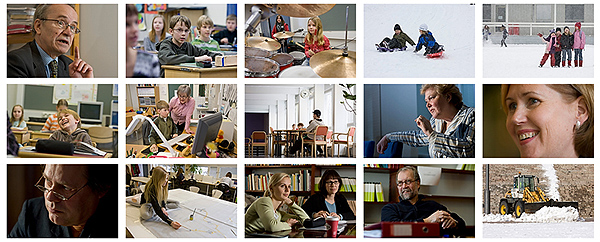
When I went freelance again I decided to add a few case studies on my website so that prospective clients could see the kind of work that I do in greeter detail than they could on my folio pages. It’s going to be time to post some new ones soon and the first to be retired will be the oldest one: a case study about a mews feature shot for the TES in Finland.

The Brief:

Go go to Helsinki for two days with a reporter and try to establish why the Finnish education system consistently comes top of the European leagues for pupil achievement by interviewing various politicians, educators and educationalists and by visiting as many schools and institutions as we could.

Delivery:

This assignment was shot whilst I was a staff photographer working for the TES and my brief was to shoot some pictures to accompany this major feature but also to gather as much stock imagery for future stories relating to Finland and Scandinavia as possible. The final edit was over 200 images and was delivered in stages during and immediately after the trip.

See the rest here

Possibly the oddest picture I ever took…

©Neil Turner/TSL | London | January 2006

The story was simple: we were doing an anonymous interview with a man who needed to remain unidentifiable for legal reasons and we had to shoot a picture of him at a time and a place that wouldn’t give his identity away. It seemed to be important that it was actually him in the picture and that became obvious when I had to shoot a proper portrait at the same time just in case the court case was decided and we needed a proper picture of him to go with a future follow-up article. Still with me?

The reporter arranged that I meet the subject at a London tube station and to get around the problems of finding someone whose name you don’t know and who you don’t have a picture of I always describe myself and what I’m likely to be carrying and wearing because a) I’m probably going to be there first and b) I’m probably going to be easier to spot (being big and carrying a lot of kit).

The venue turned out to be quite close to where he works and we decided that if any of his colleagues happened to spot us the cover story was that we were doing a fashion vox-pop on what the well-dressed office worker was wearing that season. The cloak and dagger details just kept multiplying.

I decided to go with a silhouette (you can read my thoughts on them here) and just for good measure I added an extra twist with a bit of motion blur too. The result was quite striking if bafflingly anonymous!

The technique is pretty simple. It was a dull winter’s morning in the city and we found a under cover area. I used a Lumedyne flash kit to light the brick pillar and silhouetted the subject against it. Without the flash, he would still have been a shadowy outline but so would the pillar and the picture would have been pointless.

The light that was coming from either side of the pillar was OK but it wasn’t plentiful and so I decided to give it a bit of movement blur by zooming the lens whilst the shutter was open. I ended up with an exposure of 1/8th of a second at f13 on 200 ISO using a Canon EOS1D MkII with a Canon 16-35 f2.8L lens triggering the flash with a pair of Pocket Wizards. Zooming during an exposure as relatively short as 1/8th of a second means that you have to have quite a few attempts to get it right and it also pays to tell the subject what you are doing if you don’t want them to think that you are a lunatic!

In the end I was very happy with this genuinely odd picture. I had arrived at the assignment with almost no idea what I was going to do and pretty much made it up as I went along. That’s why I love my job…

Wordsworth fun picture, December 2011

Lake District, December 2011. ©Neil Turner

The motto of Christmas 2011… and post No.50!

Angry teacher portrait

©Neil Turner/TSL, April 2005

Back in April 2005 The TES had a great article written by a newly qualified teacher about how to avoid getting angry with pupils at an inner-city secondary school. It was clearly written from personal experience by a dedicated and keen young teacher working at a relatively tough school. He wanted to teach, he wanted to be good at it and he was working hard to achieve his goals.

When I arrived at the school it was the end of the day and both of us were a bit tired. We talked about how to illustrate the story and we decided that it would be great fun and have the desired amount of impact if he just stood there and yelled at me: full-on screaming. It was loud and, as it turned out, great therapy for him. All of the pent up emotion from the day came out is one long, loud and hilarious stream.

On my way home there was, coincidentally, a radio programme about anger management. None of the experts mentioned standing in an almost empty room screaming at a photographer while you had your picture taken. I couldn’t help thinking that they had missed out of an important therapy!

There’s nothing especially clever about the picture – a slightly desaturated image, lit simply an composed carefully but it had enormous impact on the page thanks to some brave and clever design.

Mad sky, madder lighting…

Even though it was well over 12 years ago I can still remember standing on a pavement outside a rather dull new building on the University of Southampton campus which wasn’t actually open or even finished and thinking “how am I going to pull this one off?” Normally with architecture news jobs you can rely on having somebody walking past or an interesting view from inside out but on this one… nothing.

©Neil Turner/TSL, October 1999

I messed about for half an hour trying to get an angle on the structure that didn’t show cranes, builders doing the finishing touches or plastic barriers. Miserable failure. There was one redeeming feature though – the sky was a beautiful deep and even blue. I’m no great fan of polarising filters but this was calling out for that kind of treatment so I grabbed my flash gear from the car and decided to underexpose the sky and get as much light into the foreground as I could. That meant giving full power up into the street lamp that helped the composition which also meant that I could underexpose the sky nicely.

©Neil Turner/TSL, October 1999

After that my mind started racing and I decided to go for something so over the top that even I would have bet the Picture Editor would have laughed as she put it into the dustbin.

The red in the street lamp was achieved by using a red narrow cut colour effects lighting gel over the flash, which was on full power and raised as high as I could get it so that the red would balance against the saturated and underexposed sky.

This was the first time that I had tried anything like this and the great thing is that I was wrong. They used the mad picture…

Drop-in pictures.

This one was first published in April 2009…

We are in the middle of a recession – a pretty big one at that. Sensible professional photographers all over the world are looking at their business models, talking to their clients and trying to give themselves an edge. A few are trying to compete on price which might work in some markets but will almost certainly destroy others. The rest of us are just looking at what we do and how we do it in the hope that we can raise our collective game.

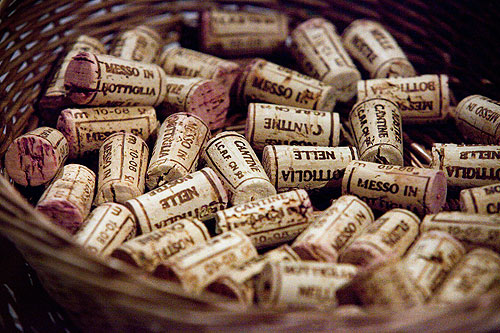
One thing that I have always done is to give picture editors what they have asked for and then give them something that they might well be able to use but hadn’t asked for. Current fashions in mainstream magazine design seem to call for a range of what we call “drop-in” pictures. Small supporting details that help to break up the copy and also tell the story.

©Neil Turner

This example of a basket of wine corks came from a commission to shoot a conference which featured a full scale banquet in the very splendid surroundings of one of the Oxford Colleges. It’s not an exciting picture but it really helps to tell the story. It can be used large or small or not at all. It took a minute to shoot, another minute to edit and forty five seconds to transmit. It helped to break up a set of images of middle aged men in black suits eating by candlelight and stands out in the clients image browsing software as “different”.
©Neil Turner

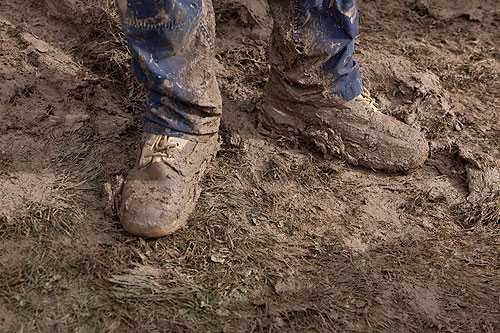
Same client, very different project. This was a story about an ecologically managed office complex where they were still making improvements. A simple shot of the builder’s muddy boots helps the story along. They didn’t use this frame but it was submitted in much the same way that the image of the corks was and almost certainly had the same effect on screen.
©Neil Turner

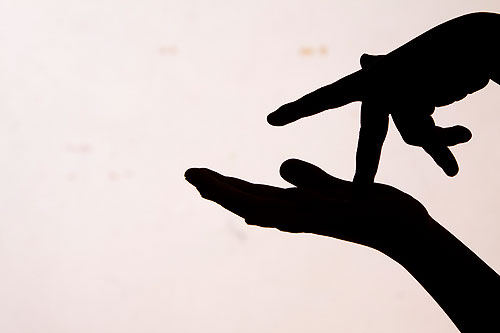
This final example, shot for an education magazine, had an entirely different effect. Shot as a supporting image – the designer saw it and decided to base the entire layout around it. The story was about using Makaton, a relatively simple sign language, to help teach primary school pupils a broad range of things. They ran headlines and copy over the pale background in a very imaginative way – a use for a very simple picture that I had never envisaged.

To sum up: when you shoot the kind of editorial work that I do it takes no time at all to add these simple images to an edit. They will be useful in years to come as stock images and they give designers and picture editors options that they hadn’t asked for. Some people might say that I’m giving “my edge” away here but I hope that I offer clients a package deal with at least four edges. I always tell students to whom I give talks about the job that I do that they need to think beyond simply what they have been asked for. It is a given that you give the client what they asked for but I have never heard one complain that you have given them something more.
Why dg28?

Originally posted on my pre-blog in 2009 but I still get so many people asking why that I thought I’d post it again…

Why would a photographer whose initials are NT call his website dg28? It’s a question that I get asked with amazing regularity and, for the eight years I have had the site, I have always enjoyed the mystique. I did a seminar last week for some London Strobists and the first question that I was asked was “why dg28?” Every time I tell the story it gets less exciting – unlike most anecdotes which seem to get longer, more interesting, more adventurous and even more heroic. I have finally decided to tell all. Right here, right now..

It all started back in 2000. I had a site hosted by AOL which had a domain name longer than anything you could properly remember and content which was attracting quite a bit of attention. I had written a couple of short pieces for Phil Askey at DPReview and sitting in a London bar he advised me to get some proper hosting and a snappy domain name. Good advice from someone who knows a thing or two about photography websites I thought.

A couple of days later I was doing one of my visiting lecturer appearances with some highly motivated post-graduate photojournalists telling them all about the digital process – something that I was already used to but few of them could get their heads around. It was a successful lecture and we ended up in another bar for a couple of drinks. We talked about photography, photographers and photojournalism for quite a while before the topic turned to the old chestnut of “what was the first record that you ever bought?”

I always like this one because I have a very good answer. One member of my family who has otherwise excellent taste started his collection with “Ernie and the fastest milk cart in the west” by Benny Hill – something which still embarrasses him. Being proud of my record I spoke first and told the students that I had bought Metal Guru by Marc Bolan and T-Rex at which point one of them (a young Canadian guy) said “that’s great. You bought Metal Guru and now you are our Digital Guru…” Cue light bulb moment… digitalguru would be a brilliant domain name.

The next day I got onto a registration website only to find that it was gone. As were several variations. Then I remembered Phil Askey saying that short is good so I tried variations on DG and finally settled on dg28.com because the dg bit is for digital guru and the 28 is for the day each month (the 28th) when I used to post updates.

You see what I mean, it’s not actually that interesting but it makes for a decent story – one which I hope to be telling less often in future.

Developing a new course

Several months ago I had a conversation with a man called Tom Hill who runs a private journalism school called Up To Speed Journalism in my home town of Bournemouth. We were looking at the options of expanding the range of courses on offer to include one for news photographers. A few weeks ago we started looking very seriously at the idea and Tom has now decided to start accepting applications for the first course which runs from January 2011.

I am delighted to have been involved in the development of the course and I will be teaching some of the elements of the course. The big tasks now are to attract the right students and to make sure that we bring the industry along with us at a time when there are very few jobs out there for new entrants to the profession. The idea is simple: to give those who come on the course the information, skills and techniques that they will need to start out on their careers as news photographers. It’s all very exciting and if you want to know more, go to the Up To Speed website where there is quite a bit of information and where you can ask questions about the course.