equipment

Canon feature request?

I had an email from someone who has followed my blogs for many years this week. He’s a working news photographer who I bumped into on a job a few weeks ago. He had noticed some tape on the top of my Canon EOS5D MkIII and my EOS 7D MkII and simply pointed to his cameras and said “snap”. He had tape on his cameras too – doing precisely the same job that the tape on mine does and went on to ask what the chances of Canon making a change to future cameras that would eliminate the need for us to tape that particular feature on our cameras. The email was to remind me that I had promised to do a quick blog post about the issue.

Taped diopter adjustment on a Canon EOS 5d MkIII

Taped diopter adjustment on a Canon EOS 5d MkIII

The tape on our cameras holds the built-in diopter adjustment dial and stops it from being moved in the bag or over your shoulder – something that happens to me a lot if I remove the tape. I have no idea if anyone from Canon’s design department reads this blog (I doubt that they do) but it seems to me that if enough of us sufferers from this problem mention it to them when we talk to them then they just might do something about it. Nikon have a lock on the diopter adjustment on some of their professional cameras so it has to be relatively easy to do.

The EOS5D MkIV will be appearing later this year if all of the rumours are to be believed so this may be a little late but you have to give these things a try.

Canon employees and dealers reading this… please help to reduce my gaffer tape bill. Soon. Please.

Think Tank Logistics Manager 30

31 May 2016. Bournemouth, Dorset. Think Tank Logistics Manager 30. Hillcrest Road

Think Tank Logistics Manager 30.

A few weeks ago I bought some more Elinchrom Ranger Quadra kit and after a short while lugging my gear around in multiple bags and cases I decided that it was time to get myself one big case to take most or all of my Quadra gear. My rationale was that I am pulling one bag on wheels and carrying two or three others so why not make it one on wheels with the lighting and one smaller bag with cameras and lenses riding on top of it or over my shoulder as required? There’s quite a bit of choice on the market but all of my experience with Think Tank bags told me to start my search there. They make lots of rolling bags but only three specifically designed to lug large amounts of kit. My benchmark was that I had to be able to get at least two of my Manfrotto 156 stands plus a couple of Manfrotto 001s in there along with two or three packs, three or four heads, spare batteries, cables, light modifiers and plenty of accessories.

I had previously seen a colleagues Location Manager 40 case and so I wanted to check out the Logistics Manager 30 because on paper it appeared to be just about perfect. The internal dimensions were listed at 70cm length. (more…)

So I bought a Canon 7D MkII

I wrote a long blog post about this time last year talking about the choice between three of Canon’s full-frame DSLR cameras. At that stage in my work I couldn’t imagine buying another crop frame camera after selling my original EOS7D and giving my opinion of it as “loving everything about the camera apart from the image quality above 800 ISO”. Well, hold the front page – the EOS7D Mk II can handle ISOs a fair bit higher than 800.

Cropped area of approximately a frame shot at 3200 ISO blown up to 100%

Cropped area of approximately a frame shot at 3200 ISO blown up to 100%

In the frame above shot at 3200 ISO you can see some noise in the out of focus areas but it isn’t nasty and it isn’t overwhelming. In the sample shot under ‘press conference’ conditions at 1600 ISO I think that the camera performed brilliantly. I would say that the MkII is at least two stops better in low light than the original 7D and maybe a bit more under certain lighting conditions and those two stops are the difference between a camera that is very usable as an every day available light camera and one that isn’t.

So far I have been delighted with it. I’ve used it on ten assignments already and it is rapidly becoming one of those things that goes into the bag first. (more…)

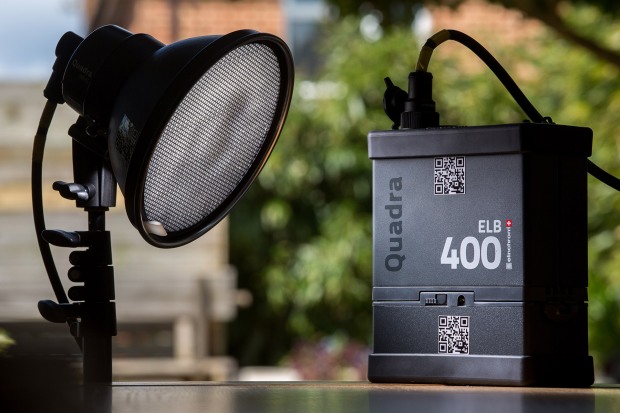
Elinchrom Quadra ELB

27 April 2016. Bournemouth, Dorset. Elinchrom Quadra ELB. Hillcrest Road Neil Turner

When I get a new piece of kit worthy of mention, I usually write a first hand account of how it is working out and go into details based on using it on a few jobs. I bought an Elinchrom Quadra ELB HS kit a couple of weeks ago and I thought that it was about time I gave some first impressions on this blog. Sadly, I haven’t used it for anything particularly interesting and I certainly haven’t stretched it beyond what I would normally do with my old Quadras (some executive portraits and a quick location shoot) but I can already see a lot of small but amazingly significant changes from the original system.

Those of you who read this blog regularly will know that I was very impressed with the Quadra when I wrote about it in my “32 Months On” and was further impressed when the Lithium Ion batteries came out. The differences between the ELB and the Quadra for most jobs aren’t huge but everything about the new kit tells me that the designers have listened and that the manufacturers have allowed their engineers to implement some great changes. For me, the positive changes with the pack are:

  • Far better display
  • Vastly improved menu system
  • Ability to recondition flattened lithium batteries
  • Better cable port covers
  • All of my old Quadra bits and cables are compatible with the new pack

I have the new High Synch head too which brings one key improvement which is the ability to synch with my cameras at shutter speeds right up to 1/8000th of a second using the EL Skyport Plus HS Transmitter and I’ll talk about these a bit further down the page.

Let’s talk about the menus: (more…)

Pelican case wheels

peli_wheels

There cannot be many photographers out there who don’t own at least one Pelican Case. The super tough plastic boxes (often on wheels) that a lot of our gear travels in are superbly designed, brilliantly made and as tough as old boots. I have three of them and another photographer swapped the standard hard wheels on my 1510 case for some softer rubber ones a couple of years ago and the absence of grating hard wheeled noises was a revelation. I find myself using my 1560 case a lot more these days and so it was time that got the ‘old soft wheel shuffle’ too.

I am not someone who indulges in much DIY but it became obvious when I read this ‘how to’ blog post by David Fearn that even I could do it. (more…)

Thinking on your feet

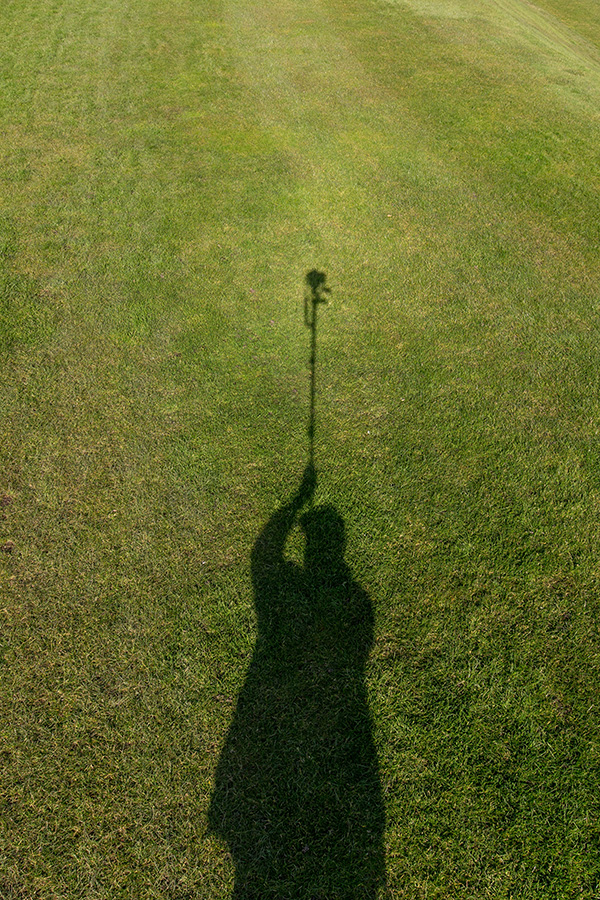
My shadow using a monopod to get a high angle picture. March 2016 ©Neil Turner

My shadow using a monopod to get a high angle picture. March 2016 ©Neil Turner

I was out shooting a job yesterday and needed to get quite a bit of extra height. The best place to shoot the picture from was on the side of a grassy hill which was very wet and the client’s health and safety policies meant that it wasn’t going to be easy to use a step ladder – whilst building a tower was outside the budget. In an ideal world a proper pole-cam or even a drone would have been the best option but the light was right and I needed to improvise.

Having used the Canon EOS6D as a remote via their iPhone app once before I was reasonably confident that my idea would work but the app has been replaced/updated and it meant learning the new one on the job. I had a basic monopod, a tripod head and a Manfrotto Super Clamp in the car but no proper way to attach the phone to the monopod to use as a viewfinder and remote release. With a proper pole-cam you rest the base of the pole on the ground and it is pretty stable. You also have a cradle for the phone or even a tablet if you want to go bigger. I had to tuck the foot of the monopod into my belt to get enough height but I had about an hour so I went into full “1970s Blue Peter” improvisation mode.

The cradle that holds my iPhone in my car was pressed into service and that attached very easily to the Manfrotto Super Clamp. Having extended the monopod to its full height I then attached the clamp to the second stage of the monopod (about eye-level when the whole thing was in use I guessed). Then I stuck the tripod head onto the monopod tilting down a little and put the EOS6D with a Canon 16-35 f4L IS lens on it. Whilst all of this was being done I was downloading the latest Canon Camera Connect app from the Apple App Store.

After a few minutes messing with settings I had the system working. I could use the phone as a viewfinder and a remote release for the Canon DSLR and I set about shooting the pictures without leaving the ground myself. After a minute or two I decided that I needed more height to look down on the subject a bit more and so I tilted the tripod head down a little and when I put the camera back into the air the foot of the monopod was resting on my chest. Even with a camera as light as the 6D I couldn’t hold it up for more than a minute at a time but we got the shot and I only got pointed at (and laughed at) by a small handful of passers-by. I wouldn’t want to have to work this way very often but, having just edited and uploaded the pictures, I know that I have a “Blue Peter”** solution that works.

** Blue Peter was required viewing as a child growing up in the 1970s. They always showed you how to make useful things from odds and ends lying around the house.

Getting to grips with my Sony RX1

Stage door of the Apollo Theatre, London. ©Neil Turner, January 2016

Stage door of the Apollo Theatre, London. ©Neil Turner, January 2016

A week ago I was shocked when the lovely folks at Castle Cameras here in Bournemouth got in touch to let me know that I’d won a new camera in a Sony competition that they were running on their Flickr site. I had completely forgotten that I had entered and when they told me to come and collect my shiny new Sony Cybershot RX1 I popped up later that afternoon. I spent most of the rest of that day playing with the camera and (shock horror) reading the instruction manual. I checked out what “the internet” had to say about the camera and stuck it in my bag determined to give it a proper outing at the first opportunity. You can see the winning picture here.

The weather hasn’t been great and I have been a bit busy with the day job and so it took a full six days before I got a proper chance to take some pictures. I happened to be in London with about three hours to kill yesterday and even though the weather was poor I was determined to have a wander and see whether I could get to grips with the RX1. I don’t really write full-on product reviews because there are other people that do it so much better than I can and this particular model Sony has been around for quite a while. It is, however, a very close contemporary of my beloved Fujifilm X100S and I was keen to find out whether the Sony could do two things: (more…)

My iPhone & not taking pictures with it

iphone_grabThere’s no getting away from two facts:

1. I am a fan of almost everything Apple for the work that I do and the way that I do it.

2. I rely on my two and a bit year old iPhone 5S for quite a lot of things when I’m out on assignments.

The speed of the 4G network and the brilliant array of apps available for all smartphones has changed the way that I do some of my jobs quite a lot in the last few years. Recently I wrote about getting pictures away quickly  and I have also written about the workflow that I use with some of the phone apps and you can see from a current grab of one of the app pages on my phone I have quite a few ways to do similar things.

I’d like to talk in this blog about some of many of the ‘un-sung heroes’ of my mobile life – at least one of which is a very new and a very, very welcome addition to the set up.

The backbone of my mobile image acquisition and transmission system is formed of the Eye-Fi and Photogene apps which have been covered at length before but you can also see plenty of other work related apps on this single screen. (more…)