Neil

Smash Up!

The caption that goes with these photos simply says “Badminton England takes to the streets to celebrate ‘Smash Up!’ a new way to play in schools, featuring music and text message breaks.” The client , Badminton England, asked me to go along and get a range of stills at a video shoot which would be the basis for a campaign to promote “Smash Up!” The idea was simple: take a few of the best young badminton players in the country to a skate park in east London and get them to hang out, play a few rallies and generally have fun.

This presents a couple of challenges that a lot of working photographers would be familiar with:

  • Fitting shooting stills around a video crew who have limited time and a lot to do
  • Taking pictures that can be used for promotional materials and not just interesting and creative ones

Experience really helps here but so do people skills and it took me a few minutes to work out who was who and what my best options were. There were a lot of skateboarders and BMX riders at the park and they were dressed much the same as the very young video crew. The folks from Badminton England were a bit easier to spot and my plan quickly evolved into one of keeping out of the way when they were shooting the wider video shots and then to get stuck back into the general image grabbing when the video guys were reviewing their work or setting up their next shots.

Very near the beginning of the morning they were shooting some sequences with two of the young badminton stars and three cameras and so I needed to be out of the way. Next to the skatepark is a railway arch with some decent graffiti and so I went with one of the other players and a BMX rider with my lights to see what we could get.
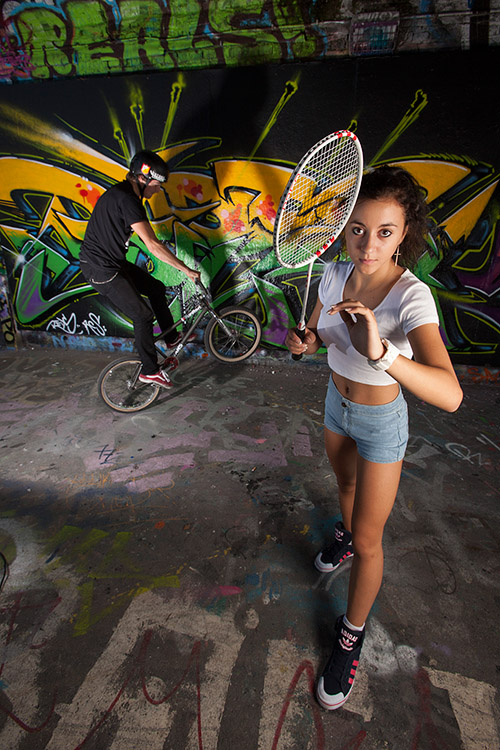
©Neil Turner, August 2013. Young badminton champion and BMX rider in the railway arches.

©Neil Turner, August 2013. Young badminton champion and BMX rider in the railway arches.

And this is one of the frames selected by Badmiton England to be released with the video. Reasonably simply lit with a 24″ x32″ soft box on an Elinchrom Ranger Quadra from the right hand side of the picture, the player stands as if she is about to receive a serve whilst the BMX rider who was lit by a second Elinchrom Ranger Quadra with no diffusion messed around in the background. We shot versions of this with both of them in action but this was the better shot for the purposes of publicity. There was almost no ambient light in the tunnel and so the whole shot is lit by the the two flash heads (running from a single pack). The camera was a Canon EOS5D MkII with a 16-35 f2.8L lens at 1/125th of a second f9 on 200 ISO.

© Neil Turner, August 2013. Rally taking place next to the skatepark bowl.

© Neil Turner, August 2013. Rally taking place next to the skatepark bowl.

Most of the morning was spent shooting action as it happened – either staged by the video crew or as it really happened. It was a case of hanging around with three cameras each with a different lens (16-35, 24-70 and 70-200 f2.8L series Canon lenses) and making pictures. The whole shoot was around two hours and I sent the client just over 90 pictures – 70 of which were these grabbed shots and the other 20+ were staged and lit images.
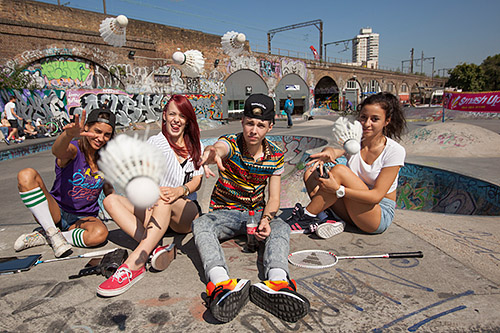
© Neil Turner. August 2013. Messing about at the end of the shoot.

© Neil Turner. August 2013. Messing about at the end of the shoot.

As fun shoots go, this was right up there. A client happy for me to shoot what I wanted and a video crew who understood that we both had a job to do under interesting conditions and with a very strict time limit. The campaign goes live very soon and I hope that badminton gets the boost in young players that it deserves.

images 34,59 or 78

Five years of freelancing

cutoutsIt’s quite hard to believe that I’m celebrating five years of freelancing this week. I hinted at it when I wrote about anniversaries a couple of weeks ago and I thought that it might be a good time to think about how things have gone and how things are going.

The first thing that comes to mind is that I still adore being a photographer. I hope that anyone who has read any of my blog posts since 1999 would have worked that out for themselves but I wanted to get that in first just in case anyone is in any doubt.

The second thing is that the timing of my move into self-employment couldn’t possibly have been worse: the economic meltdown in much of the developed world was pretty much at its zenith in September 2008 and I’m pretty sure that life would have been considerably easier had I left the staff job a couple of years earlier. That’s life.

Thirdly I want to mention the way that our industry works. Every photographer, picture editor and buyer of photography will tell you about a golden era. I really think that no such thing actually existed. That’s not quite right; I think that the invention of photography spurred a “silver” era which is still in progress and that there may have been a few golden spikes in that time. The industry has been in a constant state of change for well over a hundred years and it will continue to react to social and technological changes as long as the need for imagery exists.

So how has the last five years actually been for me? Ups and downs, feast and famine, peaks and troughs are all phrases that readily come to mind. One week I might work one day and the next I have four or even five days work. Sometimes it’s all editorial and others it’s all corporate. I’ve calculated that I’ve made 88% of my income taking pictures and the other 12% either writing about photography, teaching it or doing some consultancy work. I’ve learned the importance of having a portfolio ready to go and I have recently spent a lot of time getting my online presence to work smarter for me.

I suspect that none of the above is new to you and that none of it comes as a surprise. To be honest, I am pretty content with my new life and the only things I actually miss about being a staff photographer are:

  • I now have to buy my own car and camera gear
  • I have to do my own paperwork
  • I’m no longer an integral part of a big team.

The variety of assignments has been great, the travel has been interesting and getting to spend a lot more time at home has been wonderful. My hair has lightened to an even lighter grey but that is probably more to do with age than stress and I now have to wear glasses a bit more often than I did but that’s probably due to my age as well.

I’m not the only one who has made the move from staff to freelance and I’m certainly not the only one who did so due to newspapers and magazines reorganising and doing away with staffers. There was a discussion a few days ago about the pros and cons of being freelance and the general consensus was that it suits some people more than it suits others. I miss the team, I miss shooting every single day and I’d love to have someone there to buy me some new gear but apart from that I’m looking forward with child-like excitement about what comes next.

Neil Turner Photographer, the Facebook page

Having a gutter mentality

OK so it’s a deliberately eye-catching headline and, unfortunately, this blog post is about composing photographs for use in newspapers and magazines rather than anything X-rated. In publishing the ‘gutter’ is the fold or join between the two pages across a spread. It might be pages two and three, four and five or any other combination through thirty-four and thirty-five to the end of the publication. As photographers we have to handle those spreads carefully because there is always a chance that a badly composed or laid out picture can lose a lot of its impact through an important detail disappearing into the gutter. Experienced photographers and thinking photographers always go out of their way to give designers as much flexibility as possible to use their pictures across a spread without losing those important details.

How the pictures look

Here is an example of an image and how it was used. It’s not the greatest picture that I have ever taken but it is a very good example for the purposes of teaching – something I’ve used this picture for many times. You can see where the gutter lies – halfway through and that there is a single column of text on either side of the cropped picture. The designer could easily have laid the page out with two columns of text in white on the darker background or two columns on either the left or right of the spread – they had plenty of choice. That, to a large extent, is because the photograph was shot with design in mind.

6-003

Space on either side of the image with interesting but unimportant detail makes this an ideal editorial photograph in terms of composition. It could even have been cropped to a single page vertical if the layout hd called for the. Arguably it would have been a shame, but that’s the way it sometimes goes. You’ll also notice that the designer has taken advantage of a large dark area within the image to run a headline. Purist photographers hate having their work used (and they’d argue abused) in this way but I am happy for it to happen as long as it doesn’t trample the important details that I have mentioned previously. Put simply, shooting pictures more loosely than you might otherwise do nearly always gives designers more options.

When I’m teaching editing and workflow to other photographers I often see them cropping their images to perfection. The fact that those crops rarely coincide with the shape of the page and the fact that even if they did coincide things often change is something that I spend a lot of time talking about. The only times you get to crop your images exactly how you want to see them are in a) your self-published book and b) your portfolio. Photographers that want to get used over and over again by the same clients provide options and that means a range of pictures many of which have a strong element of flexibility about them.

I absolutely love shooting for editorial clients. I also love working for corporate clients who like to use images in an editorial way. That means that I have to think about what the designers and sub-editors might want to do with my pictures every time I have the viewfinder to my eye. When I was first starting out that was one of the steeper learning curves – easily as tough as correctly exposing transparency film and focusing manual lenses. Twenty seven years on, it has become second nature.

New work – an answer

A few weeks ago now I posted an open invitation for anyone to ask me a question. I received a few and saved some of them until I was ready to answer them. This one has been playing on my mind for quite a while:

“Why don’t you post new pictures on your blog in the way that you used to when dg28.com was the first website I looked at every week?”

That is what I call a question! There are so many parts to the answer that I have decided to list them as bullet-points:

  • I don’t shoot as much editorial work as I used to and a lot of corporate clients don’t want me to post the images shot for them.
  • I don’t have quite as much time to work on websites as I used to.
  • One of the main reasons that I stopped posting new work was that much of it stopped looking ‘new’ and I wrote about that on this blog.
  • Another reason that I stopped was the number of times people asked me to take pictures down.

Now that I am a freelance photographer I need to be very careful about what I post. Social media, blogs and websites are very public forums for thoughts and ideas and it is far too easy to do or say something that harms your business and freelancing as a photographer is very much a business. There’s also an element of protecting ideas. I published fifty technique examples in the period between 1999 and 2008 and I get emails from photographers all over the world saying that some of those lessons changed their practice. I still meet photographers who tell me that they read those pages over and over again when they were trying to develop their own techniques for using portable flash and that is gratifying but now I’m playing a few of my cards a bit closer to my chest because I have developed a few new ways of working that I’m not ready to share outside of my portfolio.

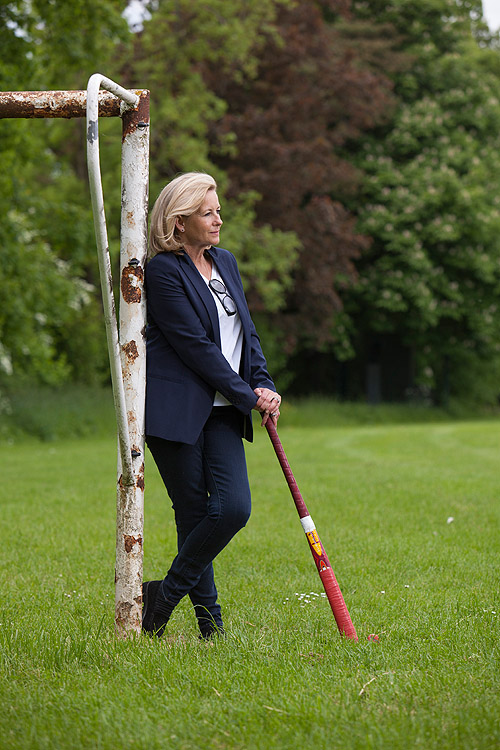
Like I said – there’s no single reason why I stopped posting and I certainly don’t rule out posting some more ‘new’ work over time. As a response to the question that was asked I have decided to post one new portrait that I made a couple of months ago for a women’s magazine. Te story was about three women who had written very personally about their time at school and how that had influenced their later lives. One of the women was journalist and author Gill Hornby and I was asked to photograph her with her dislike of school and team sports in mind. We had a few minutes at a playing field on a less than sunny day and this is the photograph that I liked most:

©Neil Turner. 07 June 2013. Gill Hornby is the author of The Hive (Little Brown).

©Neil Turner. June 2013. Gill Hornby is the author of The Hive (Little Brown).

Experimenting with EyeEm

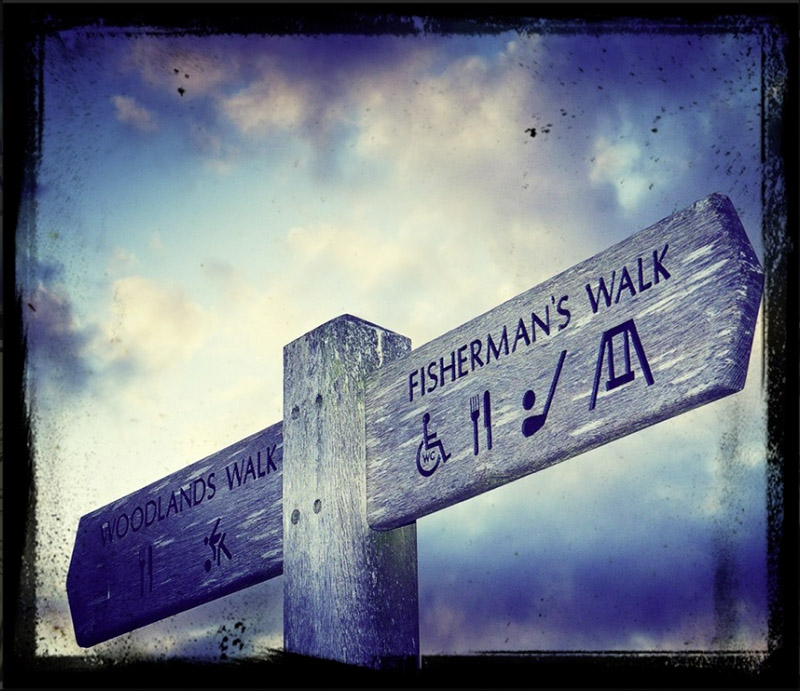
©Neil Turner, June 2013. Fisherman's Walk, Bournemouth.

©Neil Turner, June 2013. Fisherman’s Walk, Bournemouth.

A lot of photographers have been playing around with various image sharing sites. Most are doing it because it’s fun and others because they have been told that it’s a great way to get noticed by new audiences and to be seen by clients as “up-to-date”. I simply wanted to ‘have a go’. Get with the fun. A lot of photographers that I like and respect have been uploading some lovely work using EyeEm over the last few weeks and, although I’ll never beat them, I thought that I’d join them.

I missed out on Instagram and I have publicly parted company with Flickr. I’ve used Moby to share a few images in Twitter and of course TwitPic has seen a few of my pictures too.

A couple of weeks ago I set myself the challenge of uploading a few pictures to the EyeEm sharing site to see what happened. The experiment isn’t over – far from it but I am starting to find it a bit limiting and I’m starting to worry that the lens of the camera on my iPhone is showing it’s 3 years and 4 months age.

Anyway, if you are on EyeEm please let me know and please think about following my experiment. I promise not to bombard you with art – even if I’m tempted! Most of the images have nothing to do with the kind of professional work that I do and a surprising number so far have been shot around my home town of Bournemouth.

The picture that you can see above is about the most extreme treatment that I’ve given any of my pictures to date. For the geeks amongst you it was processed (contrast, sharpening and cropping) in Adobe Photoshop Express on an iPhone and then given the moody treatment and distressed border in the EyeEm app on the phone.

Fujifilm X20 – a summary of my thoughts

©Neil Turner, May 2013. Mudeford Spit, Dorset

©Neil Turner, May 2013. Mudeford Spit, Dorset

Just over five weeks after taking delivery of my Fujifilm X20 I’m sitting here trying to gather my thoughts and opinions about this intriguing little camera. It is far from perfect and it doesn’t fulfil all of the requirements that I thought that I had when I bought it. In several areas its performance is below par and working with the RAW files is not as easy as it could or should be. All of that having been said, it has become my constant companion almost everywhere I go and I still find myself adoring using it.

Put simply, there’s something about this camera that you’d struggle to put your finger on but that makes taking pictures with it an absolute pleasure. A couple of weeks ago I posted my first update about the X20 and my experiences using it. I tried to summarise the good and the bad points of the camera. You probably won’t be surprised to find out that my opinions have barely changed:

  • The video is still a pain to use and a bigger pain to import and edit.
  • The high ISO performance is still no better than any other camera with a small chip – awful.
  • The RAW file format .raf is not particularly easy to work with and the screen resolution previews in Adobe Camera RAW are worse than slow to generate.
  • The battery life has graduated to awful from appalling now that I have the menus set up better. I have twice got through two batteries in a single day.
  • The build quality of the battery clip is still suspect.

In fact I could have just cut and paste what I wrote back in April with the slight change that the battery life is marginally less awful than first thought. So those are the negatives. What about the positives? You’ll probably have guessed that they have barely changed either. Colours, tonal range, handling and the sheer joy of using it are all very positive comments that I made before and would support still.

©Neil Turner, May 2013. Mudeford Spit, Dorset

©Neil Turner, May 2013. Mudeford Spit, Dorset

I guess that I will never make it as a camera reviewer. The thought of shooting test charts and ISO range comparisons fill me with dread. In a digital world where figures and absolute measurements are the lifeblood of so many websites you should definitely go to DPReview if you want the numbers laid out and explained.

As someone who owns and uses some of the finest DSLR cameras ever made on a daily basis I want something very different from my compact ‘walkabout’ camera. I make the vast majority of my income from taking pictures and I make the rest from teaching, writing and consulting about photography. For me to want to go out and just take pictures for the joy of it, the camera has to be fun to use. And it is on that simple point that Fujifilm are getting it so completely right with their x-series range. The X100 was a great start and the X10 was a brilliant companion. Since then we’ve had the X Pro1, the XE1, X100s and this X20 to enjoy. The single factor that unites all of these cameras is the pleasure you can take from using them when you spend so much time using other (better?) cameras.

That brings me to the next point. There’s no way that I’d use the X20 instead of a Canon EOS5D MkII or MkIII for a normal assignment but on my own time, taking pictures for pleasure and for the family the Fujifilm X20 is wonderful. It will be beaten at some point and it remains true that it isn’t the best compact  in terms of image quality, speed, flexibility or any of a dozen other quantifiable factors. I propose to introduce a new scale based on the likelihood that you’ll actually bother to take the camera out and use it willingly and with a smile on your face. On that measure, and that measure alone, the Fujifilm gets a perfect ten. Right now, I’m off to the shops to get my morning paper; on foot and with my X20 over my shoulder…

©Neil Turner, May 2013. Stourhead, Somerset.

©Neil Turner, May 2013. Stourhead, Somerset.

Final footnote… I was disappointed with the built-in flash and so I decided to buy a small hot-shoe unit to supplement it. I found that one online retailer was selling the Fujifilm EF20 flash that was designed for the X series cameras at under £90.00 and so I bought it. Not a bad investment; I’ve used it quite a bit and it makes a lot of sense to have it because it fits into a pocket without too much difficulty and even has a limited bounce facility. I’ll try to post something cool shot with it soon.

Editorial portraits folio

Like most photographers I’m always looking at new ways of showing my portfolio. I’ve saved the presentation version of my editorial portraits folio as a QuickTime movie and posted it here. Please let me know what you think. If you look at it without going for the full-sized version the captions are a bit small but, apart from that, I quite like it!

Dogs on the beach – a personal obsession

I have a bit of an obsession when shooting pictures for fun. Dogs on the beach have featured in my personal work for many years and when I was out for a stroll the other day I shot this on my Fujifilm X20.

©Neil Turner, April 2013. Alum Chine, Bournemouth.

©Neil Turner, April 2013. Alum Chine, Bournemouth.

I haven’t got a great deal to say about the picture but I have to say that I really enjoy shooting with the Fuji compact. There is something about the way it handles and about the very satisfying click that the artificial shutter sound makes that makes me want to take pictures. Professional photographer, keen amateur or camera novice – it doesn’t matter as long as you get that “I want to take some pictures” feeling every once-in-a-while.

1/1000 sec;   f/9;   ISO 100