photography

Performing the ritual of “The Selfie”

For as long as I can remember I have shot pictures of my wife and I on holiday with a compact camera at arm’s length. I have examples in the family album dating back to 1984 and, whilst I’m not claiming to have invented “The Selfie”, it really isn’t anything new in our house. We started doing those pictures just because there was never anyone else around to take the picture for us and so it was very much a second best picture. Slowly and over the many holidays that we have enjoyed together it became something of a tradition to do at least one of those arm’s length couple pictures but we always liked to get a passer-by to do the picture if we could. It is a phenomenon that I am fascinated by and I often shoot pictures of people as they perform the Ritual of the Selfie.

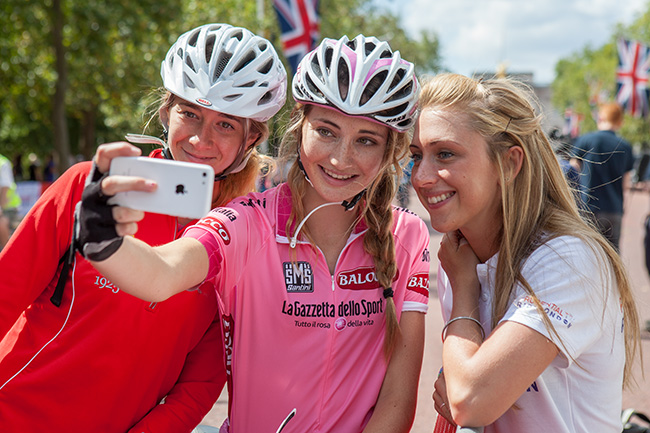
Olympic and Commonwealth Gold medallist Laura Trott posing with riders on The Mall in a break between media interviews during the Freecycle event - part of Prudential RideLondon. 9th August 2014.

Olympic and Commonwealth Gold medallist Laura Trott posing with riders on The Mall in a break between media interviews during the Prudential RideLondon Freecycle event. ©Neil Turner, 9th August 2014.

I was prompted to compose this blog post because I suddenly realised why it works so well. One of the media team working with Prudential RideLondon had offered to take the picture and the three young women dutifully posed but their faces didn’t come alive until they rescued the phone and performed the ritual of the selfie. There seems to be a confidence and a joy in taking your own picture of yourself and your friends or, in this case, you, your friend and an Olympic and Commonwealth champion. Is it because these days that can see themselves in the screen and only shoot when they are happy with what they see? I believe that there’s an element of that in it but the sense of self-reliance is just as important as far as I can see. There is a joy in The Selfie that is missing from a perfectly well taken group photo. Time after time we all saw people enjoying taking self portraits during the event and that’s the case almost everywhere almost every day.

Where I depart from the celebration of The Selfie is where media outlets and PR companies encourage people to do it and post them as part of marketing campaigns. For me the innocence and joy of the ritual gets lost when it is prompted like that. Where I also have an worries about it is when people do it dozens or even hundreds of times a day. I had a link request on EyeEm the other day from a guy who have over 6,000 images on his account and, from what I could see, they were all of himself.

I don’t object to The Selfie at all. In fact I indulge in the ritual myself from time to time. All I’d ask is that marketing people without another great idea stop trying to make something from them that isn’t really there. Photography is about a lot of things and fun is right up there as one of the most important.

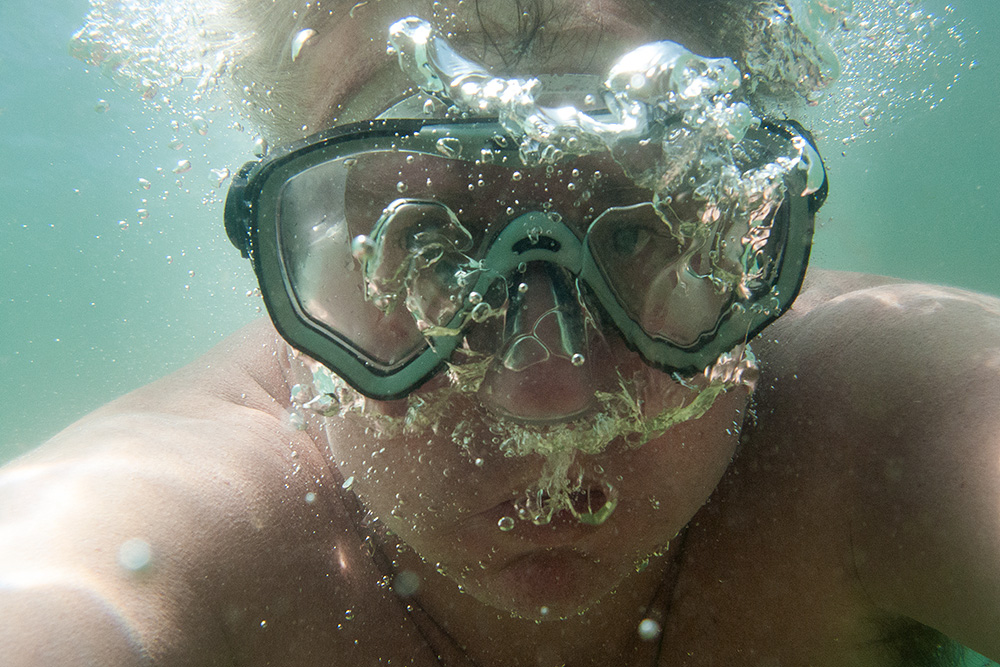
The one "selfie" that I do like of mine - under water at the beach in Bournemouth in the summer of 2013. ©Neil Turner.

The one “selfie” that I do like of mine – under water at the beach in Bournemouth in the summer of 2013. ©Neil Turner.

Working other people’s files

From time to time I work with teams of photographers as an editor. It’s part of the ‘rich portfolio’ of roles that I have these days. 80% or more of my work is still shooting pictures and that’s great but for the other 20% of my working life I enjoy doing some other photo-related stuff. I’ve written before about teaching and running workshops and one of the workshops that I do is about sharpening up your workflow. For me the best way to help others improve their workflow is to sit down with them and go through how they work and then refine what they already do rather than to throw everything out and start again.

Editing other people’s work is a whole other matter. Imagine being in a deadline driven environment where you have several photographers all shooting RAW and where you have to occasionally grab their memory cards and do some of their edits for them. On one recent job I handled CR2 files from Canon EOS1DX, EOS5D MkIII and EOS5D MkII cameras as well as NEF files from Nikon D4S, D4, D3S, D3, D800 and D610 cameras over a two week period. Some of the cameras were left on factory settings and others had been set up by their owners to the point where none of the settings were left unchanged. RAW files obviously allow you to return the completely unchanged state but I am a believer in the idea that you trust the photographer to have made changes on purpose and to respect those changes wherever possible as you come to edit their files.

The old, old Nikon Vs Canon debate morphs into a NEF Vs CR2 debate. As a long-time Canon user myself I thought that I’d find the CR2 files far easier to work with and I was ready to spend far more time getting NEFs right. The biggest shock was that it was entirely the other way around. Files from the latest Nikon cameras can be easy to work with. Really easy. I realised after only a few hours that, as long as the in-camera settings weren’t eccentric, NEFs from the D4, D4S and the D800 were not only easy to work with (requiring relatively few adjustments) but that the quality was uniformly high. In contrast the imported CR2 files from all of the Canons looked a lot less impressive as they landed in Photo Mechanic and then in Adobe Camera RAW. On average, it took more clicks of the mouse (maybe 50% more) to get the CR2s looking as good as they should.

Needless to say, this was quite a revelation. It isn’t as if I hadn’t worked with other people’s files before but this was the first time that I had seen the results of so many different people’s work from so many different cameras in such a compressed space in time. The pictures were all coming from top class photographers and the end results were largely indistinguishable from one another but the route to get there was certainly different. There are way too many variables to draw any definitive conclusions from this but I can say the following;

  • Any reservations that I might have once had about the NEF file format are long gone
  • The results achievable from both NEF and CR2 full-frame cameras are on a par with one another
  • The idea that the colours rendered by Nikons and Canons are inherently different has a small toehold in fact
  • The RAW files from all of these cameras are incredibly versatile and you can get the desired results from either
  • Given the choice I’d go with the NEF from a well set up D4S as the file from other people I’d prefer to work with

Since that event where I worked all of these files side-by-side I have also had a long play with NEFs from a D810 and a D800E. They both require careful handling because of the absence of a low-pass filter over the chip. This gives greater apparent sharpness and a degree of “pop” that is hard to describe but on the flip side it is much easier to mis-handle the files and introduce noise and chromatic problems when using a RAW converter or Photoshop itself. To get around this you find yourself constantly switching between degrees of magnification on the screen to check the effects of any changes to contract, highlight, shadow, saturation or sharpening that you apply. I found this to have a significant slowing effect on my workflow but I also loved the quality of the images produced. The D810 is a camera that I’d happily add to my list of those producing desirable files to work with.

So, NEF Vs CR2? Out of the blocks the NEF files that I’ve worked with over the last few months streak into an early lead but the CR2s catch up along the back straight and they are neck and neck at the line. For now…

Image rescue software

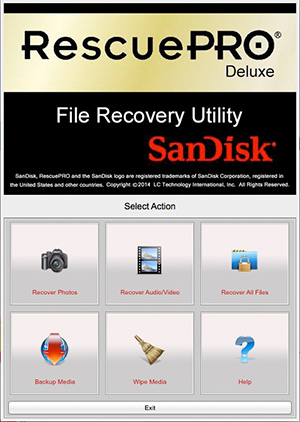
sandsk_rescue_proI just thought that I’d post a very quick note about the free one year licenses that I got with two new Sandisk compact flash cards that I bought today. As someone who relies on their cards for a living it’s great practice to replace and update your cards so every few months I buy a couple of new ones.

Since I went freelance and got to start making my own purchasing decisions almost six years ago I’ve been buying ever larger and ever faster Sandisks. I don’t always buy the fastest or biggest but they tend to be faster and/or bigger than the last batch. Anyway, you get the idea.

This time it was a couple of 16 gigabyte 120 mbps CF cards that work nicely with the Canon EOS5D MkIII cameras each of which came with a one year license for the Rescue Pro Deluxe software. I was prompted to get a couple of new cards because my last one year license for the software expired a week or so ago. It struck me that this is quite a good way for Sandisk to keep me loyal and for me to keep up to date with the software. Every twelve months I need to buy at least one new card and by doing so I keep the software running. By buying two new cards, I now have two computers with valid licenses!

Everyone is a winner.

The joke here is that I haven’t ever had a Sandisk card go wrong on me. I have rescued a card belonging to a colleague (Transcend Card) and I have had some fun ‘rescuing’ a few very old and very small retired cards of my own.  Earlier today an ancient Lexar 512 Mb card threw up some images shot on a Canon EOS1D in 2003 and some more shot on a 1D MkII in 2005. A 2GB Sandisk card went through the process a few minutes later and that had some personal stuff from 2008 along with a couple of jobs from the same year. If I can find the right card reader in the loft, I also have a PCMCIA card dating from 1998!

This could become addictive…

Stage two of the RAW argument

Ten years ago the “should I shoot RAW” debate was raging between all kinds of photographers. Slowly but surely the vast majority of us have moved over to the RAW camp having realised that you not only get better quality but can also save time if your workflow is good enough. OK, so you only get 300 images on an 8 gigabyte memory card but memory is cheap these days and all of the other advantages of shooting Jpegs (unless you are offloading files straight from the camera) have disappeared one by one.

So that’s stage one of the RAW argument out of the way.

Screen Shot 2014-07-17 at 10.39.41

So far, stage two has appeared to be a whole series of “my RAW converter is better than your RAW converter” arguments played out endlessly across social media. Proponents of one system produce videos that “prove” their point of view on YouTube and then those links are posted on Facebook, Twitter and who knows where else until someone else comes along and “proves” the exact opposite. Some of them even try to sell you expensive and largely pointless plug-ins and actions that promise to take your photos and turn them into masterpieces in a single click of a mouse. Is it all valid comment or is it just hot air? I’m leaning heavily towards the latter.

Buying, learning and mastering every single quality converter would be expensive and mind-numbingly dull. Few of us use any software to anywhere near its limitations and some of the claims for various applications go largely un-challenged.

A few years ago people started to talk excitedly about Capture One as being a gold-standard amongst RAW converters. It would have been around version four that I persuaded my then employer to send me on a one-day course to learn the basics of the workflow. It was good. It was actually very good and I bought it (well, my employer bought it for me). Fast forward to version six and I wrote glowingly about it on this blog saying that I really liked it despite a few flaws. Well of course that was comparing it to Adobe Camera RAW in Photoshop as it was then. Both applications have upgraded since then as have Aperture, Canon DPP, Nikon Capture, DxO and a range of others. Each of them has advantages and disadvantages that skilled users of each piece of software can and will point out to anyone who will listen. Those skilled users can also get the very best out of a file using their chosen converter. Capture One Pro 7 is wonderful but so is Adobe Camera RAW 8.5 and so are lots of others.

And here is the first major conclusion – as long as you have the RAW file, you can endlessly go back and rework those files with every new and supposedly better application you try or buy. For the record, I don’t believe that there is anything other than a tiny difference between the best of them when it comes to image quality if the person doing the work has the skills and experience to get the most out of the files or the software. The old “this application is better at recovering highlights” comment that you hear so often is not only subjective but largely a thing of the past. As new versions come out and as new cameras present us with new variants of the RAW formats then differences do become apparent. A quick upgrade to your chosen application and those problems go away again.

Here is the second major conclusion and the principle piece of wisdom that I want to impart: It’s all about the interface. How you interact with the application has a greater influence on what you get out at the end than anything else. Application A does a great job but so do Applications B and C. If you are comfortable with B then choose B and don’t stress about the relative merits of A or C until such times as B can no longer deliver the quality from your files that you and your market demand. Changing workflow and moving to a new RAW converter is painful, time-consuming and throughly depressing (unless you are a geek like me). My heart goes out to the Aperture users who are facing having to do just that at some time in the near future now that Apple have announced that they are stopping development.

As software gets better, the files we process through that software gets better and our workflows become more embedded someone, somewhere will do some “testing” and pronounce that they have the perfect workflow and Groundhog Day will be upon us for the zillionth time.

I sometimes end up working with other photographers files and the difference between types of files is astounding. Canon 5D MkII files next to Canon 5D MkIII files require different handling but the difference between those and something like a Nikon D4S file is astonishing. Not better, not worse but different. Different to the point that you have to tweak your technique. Using the exact same software, workflow computer and set-up the two types of file react very differently to the same treatment. This, ladies and gentlemen, is my third and final major conclusion from stage two of the RAW debate – Not all RAW files are created equally so don’t assume that you can work the same way with them.

Bring on stage three please.

Portfolio updates – finally!

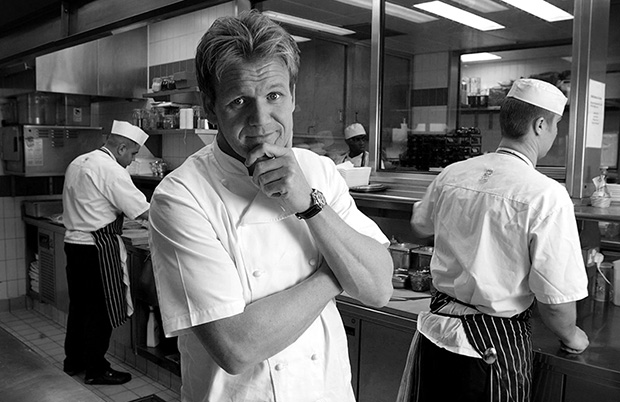
©Neil Turner/TSL February 2003. Gordon Ramsay photographed in his kitchen

©Neil Turner/TSL February 2003. Gordon Ramsay photographed in his kitchen

I have just finished uploading a major update to my website with a refreshed selection of new and old images in the portfolio section and an updated look to the templates pages with links to all of my social media.

I still do most of the work on my site myself and so it takes a lot longer to do but I am very happy with the way that photographs look on my site and I guess that is a major selling point. There will be lots more changes over the next couple of weeks but I’d like to invite you come to the site and have a look at the new portraits selection as well as two new galleries of personal work which will definitely be updated as they are both about continuing passions of mine.

My website is www.dg28.com and if you have any feedback, I’d love to hear it.

Space makes you think – part 2

©Neil Turner, March 2013. Family enjoying an early spring afternoon near Fisherman's Walk in Bournemouth, Dorset.

©Neil Turner, March 2013. Family enjoying an early spring afternoon near Fisherman’s Walk in Bournemouth, Dorset.

A very long time ago when I was studying photography at the Medway College of Design I was surrounded by like-minded and equally obsessive photography students who all wanted to unlock the many ‘secrets’ of great photography so that we could all some-day be someone. We were only a very short distance along the journey (it was the first term of the first year) when we were set a project to shoot an object against a background where the object would be very small and still have great composition and make sense. It was a lesson that I will always remember for two reasons:

  • The first is that I loved it and actually shot four or five entirely different pictures – ranging from a damp and golden autumnal leaf on a grey path to a red balloon against a bright blue sky.
  • The second reason is that during a group critique someone (and I have no memory who) said “space makes you think”.

Space makes you think has stuck with me to this day and as a short and snappy phrase it appears in my thinking and in my discussions on a very regular basis. From the day I learned that lesson and then learned to leave space in my compositions for mastheads, strap line, type and headlines I have always looked for pictures with space. Cropping images really tightly is a great way to shoot some subjects and I remember another phrase from my student days which sums that up too “if an element doesn’t add to the composition then it detracts from it”. That’s also true and that, ladies and gentlemen, is why photography is so enthralling, confusing, infuriating and rewarding. Two ‘rules’ that appear to directly contradict one another that form the basis of one of those secrets that we as students of the art/science/profession spend our lives trying to grasp and the interpret in our own ways.

Rules are there to be obeyed most of the time and broken often enough to make sure that we remain creative in our thinking. That was true back at Medway College, it still is and I hope it always will be.

* Those other “obsessives” included Jez Coulson, David Chancellor, Bill Green, Richard Gosler, Mike Cooper, John Baxter, Richard Ansett and Andy Eaves who, I am delighted to tell you, are all still as obsessed as they were! There were 28 photographers in our year and I’m sure more than those listed above are still plying the trade.

How long does gear last?

When I teach new photographers the business studies element of what it is to be a working photographer I go through a whole exercise which adds up the cost of the gear and then divides that cost by the number of working days that it might be expected to last before you need to replace it. My formula was mentioned in a previous post and I try to be realistic about the life span of the principle kit that we need. Camera bodies, for example, last somewhere between two and three years on average whereas lenses last four, five or even six years. It’s a simple idea and when you add it all up you come out with a figure that represents the amount of money it costs to be a photographer based on working a fixed number of days per year. For most photographers that’s around the £45 – £60 mark.

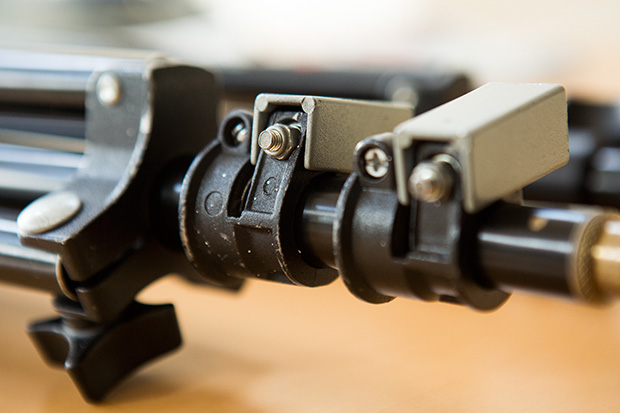
©Neil Turner. March 2014. My Elinca branded lighting stand that is at least 21 years old

©Neil Turner. March 2014. My Elinca branded lighting stand that is at least 21 years old

Some gear, such as tripods and equipment bags last a lot longer and there’s good evidence to say that a Pelican case is for life as long as it doesn’t get stolen. I was looking at some kit this morning and making sure that I had everything that I needed for a two-day job over the weekend when one of my lighting stands came apart. That got me thinking about how much this stand had cost me on a ‘per day’ basis since I bought it somewhere between 1990 and 1993. I won’t go into how I can narrow the dates down but let us say that it is at least 21 years old. At today’s prices this stand would probably cost about £70.00 (but probably cost me a lot less) and by dividing that by 21 you can see that it has cost me £3.33 a year. That’s a meagre £0.26 a month or, if I work 150 days a year that’s £0.02 per working day.

I have used lighting stands every single working day since then and, whilst it hasn’t always been this one, my preference for a specific brand seems to be justified by the way that they take a battering. That brand is Manfrotto – even though this one is labelled “Elinca SA” it is clearly a version of an older Manfrotto 052 model (not the same as the current 052 or 1052) because it is almost identical to another stand that I have which is labelled “Manfrotto 052”. I also have a pair of identical lighter-weight stands where one is branded Manfrotto and the other is branded Lastolite and a pair of tiny stands where one is Manfrotto and the other is Bogen. It doesn’t take a genius to work out that one manufacturer was/is making them and that they were/are being sold under many labels.

Going back to the stand itself, when I say “fell apart” what I mean is that this stand came apart at one of the connections. When I had a good look it was obvious that it had lost a bolt and nut that tightened around the metal tubing keeping it in place. Three minutes later, I’d found a suitable replacement amongst the bits and pieces in my garage and the stand was fixed and ready for a lot of action over the next weekend. So that’s a lighting stand of extreme professional quality that costs me two pennies a day – what a bargain! Of course I have forgotten to add the maintenance costs – £0.12 for the bolt that I fitted today plus my labour at a maximum of ten minutes.

For the record, I have three Manfrotto tripods (all with Manfrotto heads), three Manfrotto monopods and a case full of their accessories (Super-clamps, suction clamp, low-level stand, quick release adapters, a boom and so on). I reckon that I have about £1,000.00 worth of Manfrotto gear in total – most of which is over ten years old and some of which is over twenty years old.

Manfrotto haven’t paid me for this blog post, nor have I spoken to anyone from the company or any of their distributors or retailers. I just think that their kit is pretty good value for money. Of course, if they want to offer me a retrospective bribe…

A very different kind of photography

©Neil Turner February 2014. Low level Aurora activity over a frozen lake, Inari County, Finland

©Neil Turner February 2014. Low level Aurora activity over a frozen lake, Inari County, Finland

Just a week ago I was standing on a frozen lake in northern Finland with my Wife and a dozen other people watching and waiting for the Aurora Borealis to charm us with its dancing and colours. We were in Finland because it was my fiftieth birthday and my Wife had spoiled me with a trip to see if we could see the Northern Lights. Being an obsessive photographer I wanted to shoot some nice pictures of some amazing skies but it was this frame which shows some light pollution and very low levels of activity that I love the most.

This kind of photography is a million miles away from what I do best and this is the first time that I’ve ever seriously tried to photograph a night sky in this way. It was dark (three hours after sunset) and it was cold and it was magical. As you can see from the image below, we went on to shoot some much prettier Auroras but there’s something about this frame that makes me want to go back and try again.

©Neil Turner February 2014. Medium level Aurora activity near Ivalo, Finland

©Neil Turner February 2014. Medium level Aurora activity near Ivalo, Finland

Techie stuff:  Exposures varying from 10 to 30 seconds at between f2.8 and f4 on 2000 ISO. Canon EOS5D MkIII with a 16-35 f2.8L lens on a Manfrotto 055 tripod