photojournalist

The anguish of editing your own pictures

©Neil Turner. London, January 2011

I’ve written about this kind of thing many times but it seems to come to the forefront of my photographic consciousness over and over again so I hope that you will forgive me if none of this is new.

There are a lot of great reasons why photographers have to edit their own work. They are the only ones who truly know what was shot, why it was shot that way and how well the pictures reflect the situation. For news photographers the idea of someone else doing their edits is, largely, a far-fetched and even unwelcome notion. It is happening more and more though.

Some of the big wire agencies and more progressive newspapers are using direct wireless transmission from cameras to editors on big sports and news jobs where the time between shooting the pictures and getting them to market is absolutely critical.

If, however, time is not quite so much of an issue photographers like to sit down and go through their own pictures, make their own selections, add their own captions and prepare the files for delivery. That’s how I’ve worked for the last fifteen years or so and even before then I was often in charge of my own edits because that was how things were done.

Every once in a while (mostly on commercial shoots) someone else edits my pictures. I find it both liberating and scary in equal measure. The liberation is that I get to concentrate on shooting pictures and the scary bit is that someone else gets to see everything – the good, the bad and the downright indifferent. What if they miss the subtlety of that amazingly constructed picture on the second memory card? What if they don’t appreciate the ultra-shallow depth of field that I grafted so long and hard to realise?

There’s a good counter-argument to that of course: If a professional editor doesn’t get what I was trying to do, neither will the client, neither will the designer and neither will the viewer. There are some pictures that you take on almost every shoot that are there for you and for you alone. That is true but every once-in-a-while those pictures do get used. Every once-in-a-while somebody else gets your vision and loves the ‘weird one’ as much as you hoped that they would.

Editing your own work is a tough thing to do. Try editing a full set of someone else’s pictures and you will realise just how easy it is to be dispassionate and just how readily you are able to discard pictures that don’t work. Editing your own work can be a minefield. Every step can bring a very tricky decision. What about the pictures that you have a personal emotional connection with? What about the pictures that you have overcome huge technical challenges to secure? What about the pictures that don’t actually add to the edit or make sense as part of a set?

Taking a shoot and making sense of the pictures from that shoot is a skill that very few photographers ever truly get right. Those that do are blessed and really lucky because they avoid the regular pain and anguish of having to ignore their own ‘babies’.

I have four things that come into my mind every time I am struggling to decide about a single frame: light, composition, subject matter and technical quality. If all four are right the picture goes in. If three out of four are right it will probably make it too. Less than three and that’s where the anguish begins…
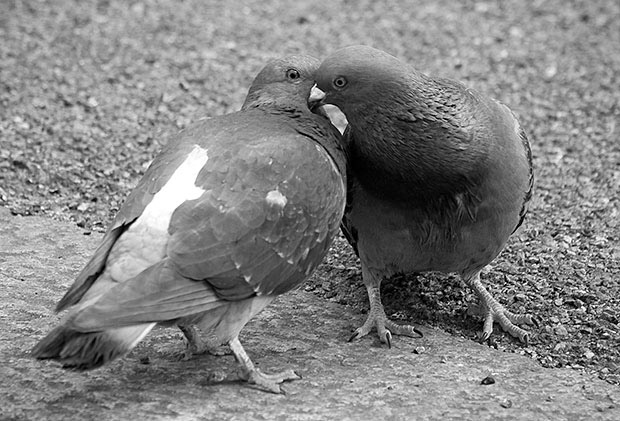

Fun picture – pigeons checking each other out, Bournemouth

©Neil Turner. February 2012. Bournemouth

I don’t know if spring is in the air but these two pigeons outside a supermarket in Dorset this morning look as if they were rehearsing for Valentines Day next week.

Fifteen minutes of low level fame

To be entirely honest it was actually thirty-four minutes rather than fifteen but Andy Warhol’s observation that everyone will be famous for fifteen minutes is a gift of an opening and it’s so much punchier than thirty-four!

The half an hour plus four minutes in question was the time that I spent giving evidence to The Leveson Inquiry into the culture ethics and practice of the British press on behalf of The British Press Photographers’ Association. If you didn’t already know, I am very proud to be one of the two Vice-Chairmen of The BPPA – an organisation that supports and promotes news photography in the United Kingdom.

I have written a short blog about my experiences and there is a link to actually watch a Flash (boo!) video of me in action. This isn’t about self-promotion, its about the important message that I was given the honour of presenting to this important inquiry. Did it go well? Go to The BPPA’s blog site and find out…

Archive photo: Private investigator. December1990

©Neil Turner/Insight. December 1990. London

Back at the end of 1990 I was sent to accompany a reporter to do an interview with a private investigator. He was an ex-Metropolitan Policeman who had a very good reputation and track record in finding runaway children. He was possibly the severest looking person I had ever met and his penchant for big fat cigars did wonders for his image. The truth is that he was actually a very caring man and both the reporter and I liked him a lot.

When I did a quick “Google” for the man I found that he had given another interview to the newspaper ten years later and that he was still as forthright as he had been. I would imagine that he has since retired but I still look very fondly at this picture and remember it’s place in one of my old portfolios.

This was shot using ambient light at his office in Southwark. I was probably using a Nikon FM2 with a 180mm f2.8 Nikkor which I had at the time and the film is Kodak Tri-X. This was scanned from a fibre-based print which was printed full frame with the rebate showing.

The early days of digital

I took delivery of my first Kodak DCS520 digital camera in late November 1998. It was a revelation. I had used a previous model (DCS3) which was pretty poor and I wasn’t really that convinced about the whole process. After three days, I was a convert – the kind of convert who then sees it as their role to evangelise about their new-found wisdom/insight/faith. Based on the Canon EOS1n camera, the Kodak conversion replaced the whole of the back of the camera and quite a big chunk of the electronics too. It was expensive, relatively slow and it only had 1.9 megapixels. It had a tiny low resolution LCD screen on the back and it used enormous and expensive batteries that rarely lasted a whole day but I absolutely loved it from that first week!

©Neil Turner/TSL. 10th December 1998

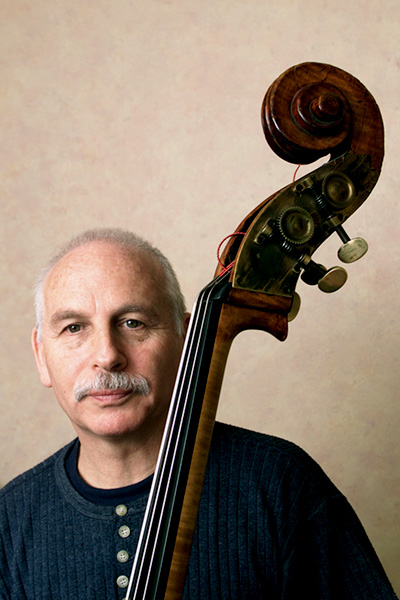
This was one of the first proper portraits that I shot with my first DCS520 (known as the Canon D2000 in some countries) and it was of a double bassist and jazz teacher in his own home. My conversion was so dramatic and so complete that I even remember sulking a little when I had to shoot on film for the glossy sections of the newspaper. We worked with these early cameras for nearly four years until the Canon EOS1D came out. Nikon had introduced the D1 in that period and the see-saw battle for supremacy between the two big manufacturers with input from Kodak and Sony began in ernest.

I quite often get asked what the big trigger was for digital in the newspaper industry. There are a few factors;

  • The arrival of cameras capable of shooting quality images
  • The money saved by newspapers getting rid of darkroom staff
  • The arrival of new health and safety laws that meant waste chemicals became very expensive to dispose of
  • The speed of turnaround of digital pictures
  • The ease of archiving digital images

Talking with others who used the Kodak DCS series camera from that era we all agree about one thing – how good Kodak’s software was. What a shame that they threw away their lead in professional digital photography. If they had even kept their software development going, they could possibly have avoided needing to file for bankruptcy protection in the US courts last week. I look back at the early days of digital with a real fondness – they really were the most exciting of times. There’s something very cool and very rewarding about being in the second row of pioneers!

Interviewing for September 2012 NCTJ Photojournalism course

It only seems like a few weeks ago that I was writing about how excited I was about being involved with the development of a new photojournalism course here in Bournemouth. It was actually well over a year ago and since then we have completed one cycle of the six month course and we are over half way through a second one. The course has already evolved and we are now in the process of recruiting people for the next course which begins in September 2012.

Photo of me playing the 'role' of a confused and lost motorist during a creative flash workshop. January 2012

The idea of the course is a simple one: to train people who already have a decent standard of photography to a level where they can start or improve their careers as editorial photographers. We cover news, features, portraiture, sport and several other sub-genres of photography as well as teaching about workflow, media law, video, caption writing and story development. At the end of the course, and all being well, our students have an NCTJ Preliminary Certificate in Photojournalism as well as a lot of business studies and market knowledge. It isn’t an easy course and it isn’t particularly cheap but it is highly focused on becoming a freelance photographer in today’s rapidly changing market place.

My own involvement averages out to one day per week during which I will bring all of my knowledge and experience into play as well as getting some of my contacts to come along to the course and give seminars and talks.

The course is run by Up To Speed Journalism, based in their offices at The Bournemouth Echo and is divided into two terms – one of which is very much theory and classroom based and the other is all about shooting portfolio pictures and arranging work placements. If you are interested in finding out more, please get in touch with Tom Hill at thill@uptospeedjournalism.com

Possibly the oddest picture I ever took…

©Neil Turner/TSL | London | January 2006

The story was simple: we were doing an anonymous interview with a man who needed to remain unidentifiable for legal reasons and we had to shoot a picture of him at a time and a place that wouldn’t give his identity away. It seemed to be important that it was actually him in the picture and that became obvious when I had to shoot a proper portrait at the same time just in case the court case was decided and we needed a proper picture of him to go with a future follow-up article. Still with me?

The reporter arranged that I meet the subject at a London tube station and to get around the problems of finding someone whose name you don’t know and who you don’t have a picture of I always describe myself and what I’m likely to be carrying and wearing because a) I’m probably going to be there first and b) I’m probably going to be easier to spot (being big and carrying a lot of kit).

The venue turned out to be quite close to where he works and we decided that if any of his colleagues happened to spot us the cover story was that we were doing a fashion vox-pop on what the well-dressed office worker was wearing that season. The cloak and dagger details just kept multiplying.

I decided to go with a silhouette (you can read my thoughts on them here) and just for good measure I added an extra twist with a bit of motion blur too. The result was quite striking if bafflingly anonymous!

The technique is pretty simple. It was a dull winter’s morning in the city and we found a under cover area. I used a Lumedyne flash kit to light the brick pillar and silhouetted the subject against it. Without the flash, he would still have been a shadowy outline but so would the pillar and the picture would have been pointless.

The light that was coming from either side of the pillar was OK but it wasn’t plentiful and so I decided to give it a bit of movement blur by zooming the lens whilst the shutter was open. I ended up with an exposure of 1/8th of a second at f13 on 200 ISO using a Canon EOS1D MkII with a Canon 16-35 f2.8L lens triggering the flash with a pair of Pocket Wizards. Zooming during an exposure as relatively short as 1/8th of a second means that you have to have quite a few attempts to get it right and it also pays to tell the subject what you are doing if you don’t want them to think that you are a lunatic!

In the end I was very happy with this genuinely odd picture. I had arrived at the assignment with almost no idea what I was going to do and pretty much made it up as I went along. That’s why I love my job…

Fun picture: stray apostrophes, London.

When the news broke that UK booksellers Waterstone’s were going to drop the apostrophe from their logo to “make things simpler” the story was greeted with a mix of horror, outrage and cynicism. I was part of the cynical camp: what better way to get your company on the news than to pull a stunt like that? Leak a story that you might be about to do something and then sit back and watch it go viral and, more importantly, go viral amongst the very people who would be your core market. It was either brilliant, fortunate or (the least likely in my view) a genuine story.

©Neil Turner/TSL | London | October 2003

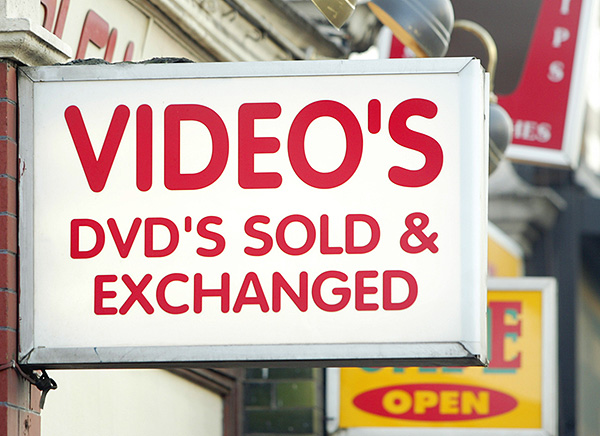
I was reminded of the last time that I was involved in a “stray apostrophe” outrage story. Back in 2003, yet another report on the use of punctuation in grammar singled out signs and posters for special criticism and so I was asked to go and find some examples. For a city reputed to have “thousands” of examples I struggled and it wasn’t until I was in the second hour of driving around looking that I finally found this gem on a secondhand video, DVD and CD shop near King’s Cross. The shop was on a one way system with almost no chance of stopping and very little parking nearby but I was desperate and so I went around again, found a parking meter and shot some pictures of the sign. The cafe next door was also the perfect place to have a quick coffee and send my pictures. Job done.