styles

Having a gutter mentality

OK so it’s a deliberately eye-catching headline and, unfortunately, this blog post is about composing photographs for use in newspapers and magazines rather than anything X-rated. In publishing the ‘gutter’ is the fold or join between the two pages across a spread. It might be pages two and three, four and five or any other combination through thirty-four and thirty-five to the end of the publication. As photographers we have to handle those spreads carefully because there is always a chance that a badly composed or laid out picture can lose a lot of its impact through an important detail disappearing into the gutter. Experienced photographers and thinking photographers always go out of their way to give designers as much flexibility as possible to use their pictures across a spread without losing those important details.

How the pictures look

Here is an example of an image and how it was used. It’s not the greatest picture that I have ever taken but it is a very good example for the purposes of teaching – something I’ve used this picture for many times. You can see where the gutter lies – halfway through and that there is a single column of text on either side of the cropped picture. The designer could easily have laid the page out with two columns of text in white on the darker background or two columns on either the left or right of the spread – they had plenty of choice. That, to a large extent, is because the photograph was shot with design in mind.

6-003

Space on either side of the image with interesting but unimportant detail makes this an ideal editorial photograph in terms of composition. It could even have been cropped to a single page vertical if the layout hd called for the. Arguably it would have been a shame, but that’s the way it sometimes goes. You’ll also notice that the designer has taken advantage of a large dark area within the image to run a headline. Purist photographers hate having their work used (and they’d argue abused) in this way but I am happy for it to happen as long as it doesn’t trample the important details that I have mentioned previously. Put simply, shooting pictures more loosely than you might otherwise do nearly always gives designers more options.

When I’m teaching editing and workflow to other photographers I often see them cropping their images to perfection. The fact that those crops rarely coincide with the shape of the page and the fact that even if they did coincide things often change is something that I spend a lot of time talking about. The only times you get to crop your images exactly how you want to see them are in a) your self-published book and b) your portfolio. Photographers that want to get used over and over again by the same clients provide options and that means a range of pictures many of which have a strong element of flexibility about them.

I absolutely love shooting for editorial clients. I also love working for corporate clients who like to use images in an editorial way. That means that I have to think about what the designers and sub-editors might want to do with my pictures every time I have the viewfinder to my eye. When I was first starting out that was one of the steeper learning curves – easily as tough as correctly exposing transparency film and focusing manual lenses. Twenty seven years on, it has become second nature.

Ask me anything…

©Neil Turner, June 2012. Dorset.

©Neil Turner, June 2012. Dorset.

Whilst looking back through some of my most popular blog posts in the last few years a surprising number of them were written in response to questions that other photographers and students of photography have asked me. That got me thinking about posting this simple update with a very simple request/offer:

“ASK ME ANYTHING… WELL SOMETHING… ALMOST ANYTHING…”

So not exactly ANYTHING – I’m only going to answer interesting questions about photography and my own work! Please use the contact form or reply to this blog posting. You could tweet me but I might miss that given the avalanche of stuff that goes across my desk each day. I will then pick out a couple of questions and use them to write future blog posts. Great… get other people to come up with the ideas!!!

← Back

Thank you for your response. ✨

Experimenting with EyeEm

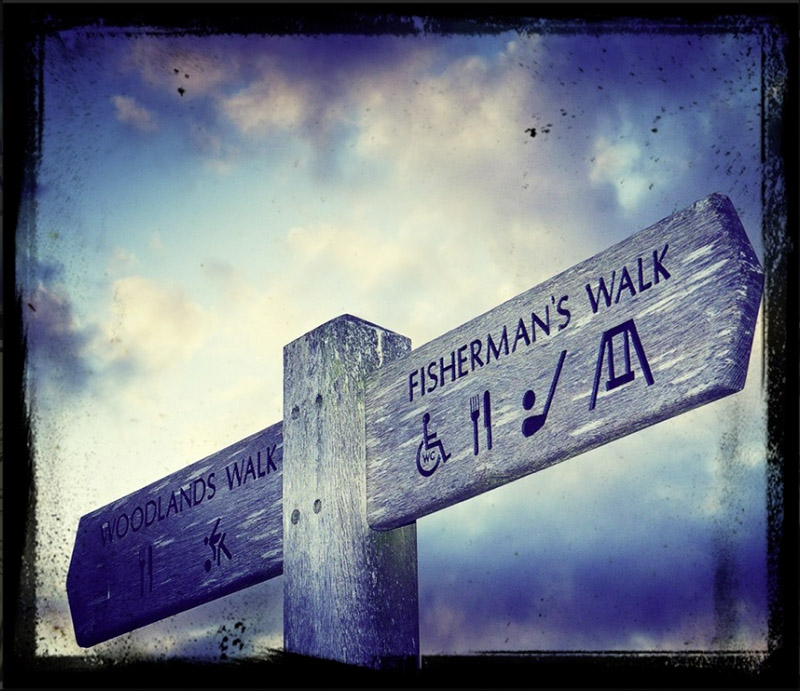
©Neil Turner, June 2013. Fisherman's Walk, Bournemouth.

©Neil Turner, June 2013. Fisherman’s Walk, Bournemouth.

A lot of photographers have been playing around with various image sharing sites. Most are doing it because it’s fun and others because they have been told that it’s a great way to get noticed by new audiences and to be seen by clients as “up-to-date”. I simply wanted to ‘have a go’. Get with the fun. A lot of photographers that I like and respect have been uploading some lovely work using EyeEm over the last few weeks and, although I’ll never beat them, I thought that I’d join them.

I missed out on Instagram and I have publicly parted company with Flickr. I’ve used Moby to share a few images in Twitter and of course TwitPic has seen a few of my pictures too.

A couple of weeks ago I set myself the challenge of uploading a few pictures to the EyeEm sharing site to see what happened. The experiment isn’t over – far from it but I am starting to find it a bit limiting and I’m starting to worry that the lens of the camera on my iPhone is showing it’s 3 years and 4 months age.

Anyway, if you are on EyeEm please let me know and please think about following my experiment. I promise not to bombard you with art – even if I’m tempted! Most of the images have nothing to do with the kind of professional work that I do and a surprising number so far have been shot around my home town of Bournemouth.

The picture that you can see above is about the most extreme treatment that I’ve given any of my pictures to date. For the geeks amongst you it was processed (contrast, sharpening and cropping) in Adobe Photoshop Express on an iPhone and then given the moody treatment and distressed border in the EyeEm app on the phone.

Fujifilm X20 – a summary of my thoughts

©Neil Turner, May 2013. Mudeford Spit, Dorset

©Neil Turner, May 2013. Mudeford Spit, Dorset

Just over five weeks after taking delivery of my Fujifilm X20 I’m sitting here trying to gather my thoughts and opinions about this intriguing little camera. It is far from perfect and it doesn’t fulfil all of the requirements that I thought that I had when I bought it. In several areas its performance is below par and working with the RAW files is not as easy as it could or should be. All of that having been said, it has become my constant companion almost everywhere I go and I still find myself adoring using it.

Put simply, there’s something about this camera that you’d struggle to put your finger on but that makes taking pictures with it an absolute pleasure. A couple of weeks ago I posted my first update about the X20 and my experiences using it. I tried to summarise the good and the bad points of the camera. You probably won’t be surprised to find out that my opinions have barely changed:

  • The video is still a pain to use and a bigger pain to import and edit.
  • The high ISO performance is still no better than any other camera with a small chip – awful.
  • The RAW file format .raf is not particularly easy to work with and the screen resolution previews in Adobe Camera RAW are worse than slow to generate.
  • The battery life has graduated to awful from appalling now that I have the menus set up better. I have twice got through two batteries in a single day.
  • The build quality of the battery clip is still suspect.

In fact I could have just cut and paste what I wrote back in April with the slight change that the battery life is marginally less awful than first thought. So those are the negatives. What about the positives? You’ll probably have guessed that they have barely changed either. Colours, tonal range, handling and the sheer joy of using it are all very positive comments that I made before and would support still.

©Neil Turner, May 2013. Mudeford Spit, Dorset

©Neil Turner, May 2013. Mudeford Spit, Dorset

I guess that I will never make it as a camera reviewer. The thought of shooting test charts and ISO range comparisons fill me with dread. In a digital world where figures and absolute measurements are the lifeblood of so many websites you should definitely go to DPReview if you want the numbers laid out and explained.

As someone who owns and uses some of the finest DSLR cameras ever made on a daily basis I want something very different from my compact ‘walkabout’ camera. I make the vast majority of my income from taking pictures and I make the rest from teaching, writing and consulting about photography. For me to want to go out and just take pictures for the joy of it, the camera has to be fun to use. And it is on that simple point that Fujifilm are getting it so completely right with their x-series range. The X100 was a great start and the X10 was a brilliant companion. Since then we’ve had the X Pro1, the XE1, X100s and this X20 to enjoy. The single factor that unites all of these cameras is the pleasure you can take from using them when you spend so much time using other (better?) cameras.

That brings me to the next point. There’s no way that I’d use the X20 instead of a Canon EOS5D MkII or MkIII for a normal assignment but on my own time, taking pictures for pleasure and for the family the Fujifilm X20 is wonderful. It will be beaten at some point and it remains true that it isn’t the best compact  in terms of image quality, speed, flexibility or any of a dozen other quantifiable factors. I propose to introduce a new scale based on the likelihood that you’ll actually bother to take the camera out and use it willingly and with a smile on your face. On that measure, and that measure alone, the Fujifilm gets a perfect ten. Right now, I’m off to the shops to get my morning paper; on foot and with my X20 over my shoulder…

©Neil Turner, May 2013. Stourhead, Somerset.

©Neil Turner, May 2013. Stourhead, Somerset.

Final footnote… I was disappointed with the built-in flash and so I decided to buy a small hot-shoe unit to supplement it. I found that one online retailer was selling the Fujifilm EF20 flash that was designed for the X series cameras at under £90.00 and so I bought it. Not a bad investment; I’ve used it quite a bit and it makes a lot of sense to have it because it fits into a pocket without too much difficulty and even has a limited bounce facility. I’ll try to post something cool shot with it soon.

Headteachers or whatever you want to call them…

Almost everyone remembers their head teacher. If they don’t then they will probably remember the Principal, Headmistress, Headmaster, High Master, High Mistress, Direktor or whatever other title the person who led their schools went by. Since 1986 I have photographed hundreds of these people and I have made the journey from being a little bit scared of them through accepting them to being impressed by the work that they do and the huge difference that their being good at their job makes to children and young adults.

I decided to put together a slideshow of some of the headteacher portraits that I have done. Most of the portraits date back to my time at The Times Educational Supplement. I also made the decision to keep them anonymous – I just wanted to show how different they are yet how much they have in common. Some of the Heads featured in this selection are famous in the world of education and one or two have been made Knights or Dames for their services to education. A few have since retired but that doesn’t matter. I don’t want to suggest that the person in charge is the only reason that some schools are better than others but I have yet to visit a successful school that doesn’t have first rate leadership.


The light in the garden

I don’t do this very often but, given that so many people are interested in the Fujifilm X20, I thought that I’d share a picture that I took yesterday ‘just for the fun of it’. No story, no real importance – just a bit of fun…

©Neil Turner April 2013. The light in our garden yesterday afternoon.

©Neil Turner April 2013. The light in our garden yesterday afternoon.

This was shot as a RAW file and converted with almost no help using Adobe Camera RAW in Photoshop CS6. The camera was in programme mode (yeah I know!) and handled the exposure remarkably well.

1/800 sec;   f/5.0;   ISO 100

Bouncing balls, hosepipes and shadow puppets.

This is not an attempt to secure higher rankings by filling the title full of potential seedy euphemisms. I came up with the title when I was teaching a flash workshop this morning and I was trying hard to come up with ways of explaining some very basic concepts regarding the best way to think about how best to use light.

We all know what bounce flash is and most of us use it from time to time. It isn’t a difficult concept to explain either but I have always referred to school science lessons (Physics in my case) when explaining the best way to angle a flash to get the optimum effect. That drew a couple of blank stares today and I had to come up with an alternative (and it appears better) way to explain it. I’m convinced that this isn’t an original concept but I came up with the bouncing ball; simply put, if you stand two people three metres apart (or 2.8 metres for anyone who has ever been to one of my seminars) and one of them wants to bounce a ball to the other and have it reach them at the same height it left at then the optimum point for the bounce is 1.5 metres from the thrower or 1.5 metres from the receiver or exactly half way. The same goes with flash; point the flash at a midway point and you will get the greatest amount of light.

Of course that doesn’t tell the whole story… and thats where the hosepipe comes in. It is entirely possible that bouncing the light at the half-way point isn’t desirable because there is a chance that the angle of the reflector on the flash means that some light will actually hit the subject without having been bounced – light from the very edge of the flash. If you imagine a powerful hosepipe and pointing the stream of water at the wall the water will mostly bounce in the same way that a rubber ball might but the spray of the water will fan out in the same way that flash light does. If your object is to soak the subject, you aim the hose directly at them. If you have to bounce it, then you pick the halfway point. If you want to get them wet without the water going where you don’t want it to go then you pick an aiming point which might not provide the greatest amount of water but will allow you the most control. Obviously, the same goes for light. Direct flash might give you f16 and the halfway point bounce might reduce that to f8 but the nicest light might be a couple of f-stops weaker still at f4 but that might not actually matter.

©Neil Turner, October 2010. Bouncing flash off of a warm-toned brick wall.

©Neil Turner, October 2010. Bouncing flash off of a warm-toned brick wall.

Put simply we are talking about the difference between quantity and quality of light. By deliberately avoiding using the most efficient bounce we often end up with a more pleasing light quality. I often bounce off of walls and surfaces six, seven, eight or more metres away and for that you need to make the bounce as efficient as you can but when the wall is only three or four metres away you have many more options. Suddenly efficiency isn’t the main concern and you can often sacrifice some quantity in favour of quality.

One of my favourite ways of teaching bounce flash is to pick very unlikely surfaces such as wood panelling or brick walls and bounce the flash off of those. Of course you often get a colour caste but a good bit of RAW shooting and/or custom white balancing will sort that out pretty quickly. Above is a sample of a picture shot bouncing the flash off of some yellow-coloured medium toned bricks. It was taken at a University a couple of years ago when I was working on a project with some very cool students.

So what about shadow puppets? Well, we were also talking about creative options and casting deliberate shadows in all sorts of shapes and the best way that I could demonstrate was to throw shadow puppet type shapes in front of the digital projector onto the screen. You can make all sorts of cool shapes from card, through venetian blinds, through windows and doors and even through the back of a wooden chair. If you get the light right, you can do some very creative stuff and all with a basic flash unit off camera.

During lighting workshops I talk about a lot of other stuff but I was amused that in one day I came up with three new ways (new to me that is) of explaining techniques and concepts – techniques and concepts that I normally have no problem describing by referring the school science lessons. Maybe they aren’t teaching science in the same ways that people my age remember any more.

Rubbish on Oxford Street

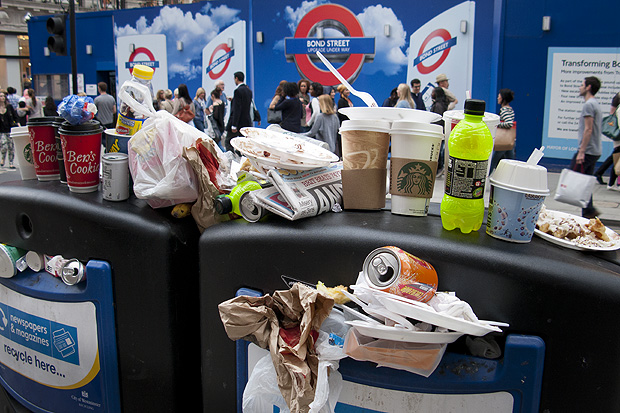
I was having a rare day off on Saturday and after a fantastic lunch in London’s China Town I walked up to Bond Street underground station to get a tube train back to where I am staying in Mile End. I usually carry a compact camera with me (still using my venerable Canon Powershot G9 most of the time) and just outside the station I saw this amazingly full and overflowing rubbish bin. It’s not often that I capture a compact camera picture that goes beyond the family album…

©Neil Turner. Oxford Street, London July 2012.

I took the picture “just because” but the more I looked at it, the more I realised that things like litter and other urban issues that don’t make the headlines absolutely fascinate me. My next thought was that images like this fill stock libraries and that I really should make more effort to shoot good generic images and submit them.

I’m no great fan of Westminster City Council who run this part of London but I admit that they have a tough job and you can see that the vast majority of the waste is fast-food wrappers and packaging. There probably isn’t an easy answer – they are fighting an uphill battle there and very little of the waste is dropped by local people. It’s a tourist area and a shoppers’ area and you might draw the conclusion that those two groups of people are less invested in keeping the place tidy.

I actually thought about labelling the post “off topic” but the  I decided that as it’s my blog, I get to choose what the topic is!