UK

Moody technique post from the old website

I have been cleaning up some of the behind the scenes stuff on my original dg28.com website and got side-tracked looking at some of the old technique posts (again). I really liked this one from July 2003 which was originally entitled “Choosing a Mood”. Anyway, here is the original post cut and pasted:

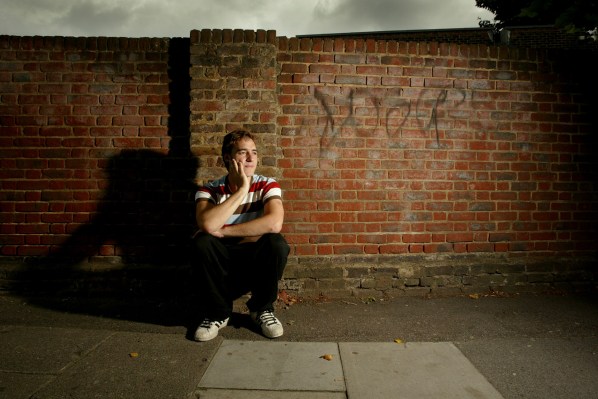
©Neil Turner/TSL. July 2003. English, Media Studies and Philosophy teacher in a north London comprehensive school.

©Neil Turner/TSL. July 2003. English, Media Studies and Philosophy teacher in a north London comprehensive school.

Every time you take a photograph you are saying something about what is in the image. It’s impossible to avoid a frozen frame being anything other than an interpretation of that moment so it becomes a mark of a good photographer to make sure that every element of the image (composition, subject matter and light) helps to paint a consistent story. 

The mood required for every image – especially with portraits – is something that you have to consider very carefully.Some lighting guides will tell you that there is a lighting set up for each mood and that it is a simple matter of placing light A in position B and light C in position D to achieve this. I have to agree that there are some obvious starting points for many of the moods that I use, but there are many other factors that have to be taken into account when setting the scene. (more…)

Seven things to agree on before taking a commission

© Neil Turner, October 2014. Production of John Foster's Shot At Dawn in the Council Chamber at Bournemouth Town Hall.

© Neil Turner, October 2014. Production of John Foster’s Shot At Dawn in the Council Chamber at Bournemouth Town Hall.

Quite a lot the posts that I’ve uploaded to this blog in the last few months have been related to the business side of photography. For those who want more of the old dg28 – your time is coming soon. In the meantime I wanted to post my thoughts on what you should agree with your client before undertaking a commission. This is taken directly from my own outline terms and conditions which are posted on my website. I have absolutely no objection to any photographer copying and/or adapting these seven points for use in their own terms and conditions because, in my opinion, the more of us who do this the more likely it is that potential clients will be used to the concepts and it will require less pushing to get them to negotiate. (more…)

Hands and portraits

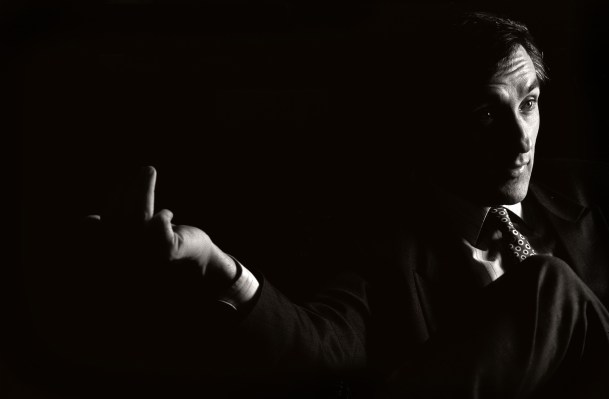
John Redwood MP, photographed during an interview in January 1994. © Neil Turner/Insight.

John Redwood MP, photographed during an interview in January 1994. © Neil Turner/Insight.

It’s January 2017 and like most photographers I am looking forward to the year with a mix of excitement and trepidation. What kinds of challenging and interesting projects are going to come my way in the next eleven and a half months? How is my work going to develop? Am I going to get enough work to pay the bills? Big questions that add to the roller-coaster of emotions that being freelance brings out.

One of the things that I always try to do is look back at some of last year’s work and compare it to older stuff and try to come up with some thoughts that help me to understand my own style better and to make sure that I don’t get tripped up by the same old mistakes. There’s a question that pops into my head about this time every year and it is one that I think that I am finally happy to answer: (more…)

Canon’s flash evolution

When I switched to Canon cameras from Nikon in 1995 the one thing that I missed from my old F4S cameras and my old SB25 flash units was the accuracy and reliability of the Nikon TTL flash. Canon, with all of their promises for the EOS1N and Speedlite 540EZ combination just couldn’t quite match what I had left behind. I have no idea how Nikon managed to get their off-the-film-plane metering to be so good but it was very good indeed.

Coincidentally, it was about this time that I started to use high quality battery powered lights. The Lumedynes that I took delivery of in 1996 changed my professional life and TTL flash became something that I used when I absolutely had to.

Fast forward to 1998 and the arrival of the first decent digital cameras we had (the Kodak DCS520/Canon D2000) and flash took a big backward step. (more…)

Manfrotto umbrella bracket challenge

Photo: Neil Turner

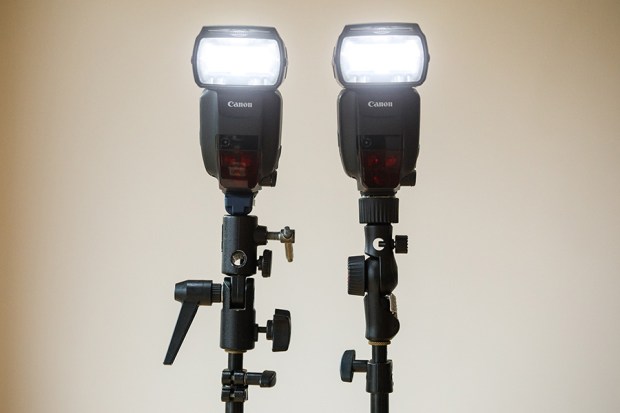
The old Lite-tite on the left and the Snap Tilthead on the right both with Canon 600EX II-RT Speedlites.

When, like me, you have been using a single product successfully for over twenty years it is normally out of a mixture of boredom and curiosity that you have to try out the next “new idea” when you see it. That happened to me a few weeks ago. Having owned and used several of the venerable Manfrotto 029 Lite-tite brackets for so many years I thought that I’d give their new Snap Tilthead with hotshoe a go. For my purposes they will do pretty much the same job: hold a Canon Speedlite flash on a stand with a folding umbrella on those jobs where using other lights isn’t so much of an option. I know that there are dozens of other brands out there but I’m a sucker for certain makes(more…)

Whilst I was out…

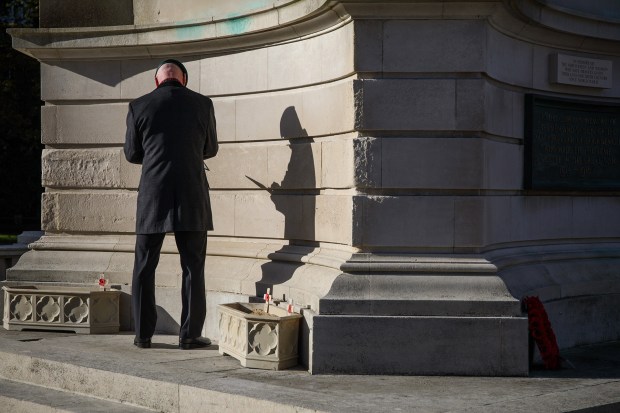
Whilst I was out shooting some pictures for the EOS5D Mark IV Update I shot a small set of pictures that reminded me that it is almost inevitable that you find interesting human stories whenever you are out shooting pictures. I met and chatted to a former Royal Marine who had donned his green beret and his medals to come along at the eleventh hour to honour one of his relatives –  a Royal Marine Musician – who died when the ship he was on, HMS Hood, was sunk in 1941.

A moving gesture from a man who had himself served for over 27 years for a relative and fellow Marine who he had never met.

Mark Tapping who served 27 years in the Royal Marines places a framed photograph of his relative Royal Marine Musician Albert Pike who died when HMS Hood was sunk on the 24th of May 1941. Armistice Day at the War Memorial in Bournemouth 11 November 2016. Bournemouth, United Kingdom. Photo: Neil Turner

Mark Tapping who served 27 years in the Royal Marines places a framed photograph of his relative Royal Marine Musician Albert Pike who died when HMS Hood was sunk on the 24th of May 1941 on the memorial. Armistice Day at the War Memorial in Bournemouth
11 November 2016. Bournemouth, United Kingdom.
Photo: Neil Turner


Lightweight lighting

portralite_both

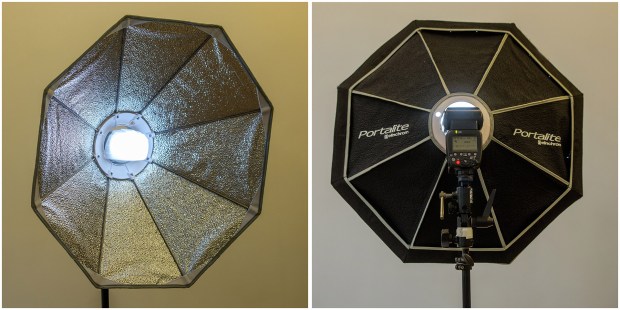
Front & rear views of the Elinchrom Portalite pressed into action.

Anyone who follows this blog knows how much I like using the Elinchrom Ranger Quadra system for a lot of my work. Next week I have a job coming up where I need to be able to pack light and rush around and I have been perfecting using the Canon radio slave system so that I can just use my Speedlights and a couple of tiny stands on the job. Whilst playing around I thought that I’d see how easily I could attach an old Elinchrom Portalite softbox to the Canon and the answer was “frightningly easily”. The Canon Speedlight 600EX II-RT comes with a diffuser cap and just popping that onto the flash after the flash tube section had been pushed through the plastic Quadra mount held the softbox rather well. I could easily add some foam tape or some velcro but this will stay in place unless I shake it around. It’s a bit smaller than I’d like a softbox to be but it is supremely light and so I’ll just have to get it that bit closer to the subject.

The Portalite folds up really small too and so I have another choice when I’m shooting. I will probably use a Westcott double folding umbrella most of the time but it really does pay to have options. Best of both modifiers work absolutely brilliantly with the Canon wireless remote set up with the ST-E3-RT transmitter and the RT flash. From testing today the recycle times on the 600EX II-RT are better than any Speedlight that I’ve ever used before and because of that I’m more than happy to work this way for this specific job.

First impressions of the EOS5D Mark IV wifi

5d4_close_up

The Canon EOS5D Mark IV – the first professional DSLR from Canon with a fully functioning wifi capacity built-in.

When Canon announced that they had added a wifi capability to the new EOS5D Mark IV I was simultaneously surprised, delighted and apprehensive – emotions which have in turn given way to a sense of relief. Wifi was a feature that many photographers had asked manufacturers to implement over a number of years and we had always been told that there were technical reasons why it couldn’t be done and that most buyers simply didn’t want it. The rise in popularity of limited wifi in consumer and ‘prosumer’ models told a different story and Canon did the right thing by including it in this latest release.

The surprise element came because very few of the rumours that preceded the announcement of the Mark IV mentioned wifi at all. A lot of those people awaiting the new camera had resigned themselves to another generation of cameras with bolt-on accessories to handle rapid image transmission. (more…)