photojournalism

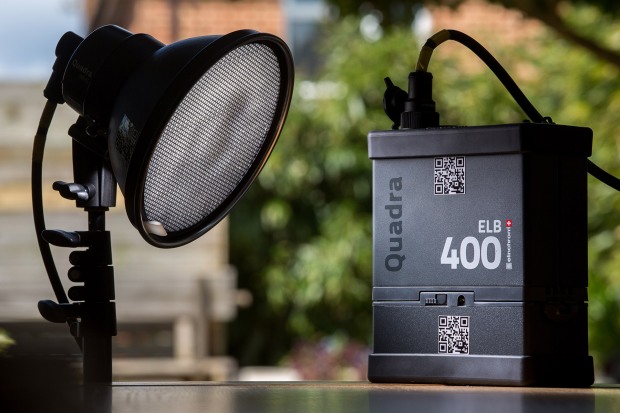
Elinchrom Quadra ELB

27 April 2016. Bournemouth, Dorset. Elinchrom Quadra ELB. Hillcrest Road Neil Turner

When I get a new piece of kit worthy of mention, I usually write a first hand account of how it is working out and go into details based on using it on a few jobs. I bought an Elinchrom Quadra ELB HS kit a couple of weeks ago and I thought that it was about time I gave some first impressions on this blog. Sadly, I haven’t used it for anything particularly interesting and I certainly haven’t stretched it beyond what I would normally do with my old Quadras (some executive portraits and a quick location shoot) but I can already see a lot of small but amazingly significant changes from the original system.

Those of you who read this blog regularly will know that I was very impressed with the Quadra when I wrote about it in my “32 Months On” and was further impressed when the Lithium Ion batteries came out. The differences between the ELB and the Quadra for most jobs aren’t huge but everything about the new kit tells me that the designers have listened and that the manufacturers have allowed their engineers to implement some great changes. For me, the positive changes with the pack are:

  • Far better display
  • Vastly improved menu system
  • Ability to recondition flattened lithium batteries
  • Better cable port covers
  • All of my old Quadra bits and cables are compatible with the new pack

I have the new High Synch head too which brings one key improvement which is the ability to synch with my cameras at shutter speeds right up to 1/8000th of a second using the EL Skyport Plus HS Transmitter and I’ll talk about these a bit further down the page.

Let’s talk about the menus: (more…)

The story behind a picture #4

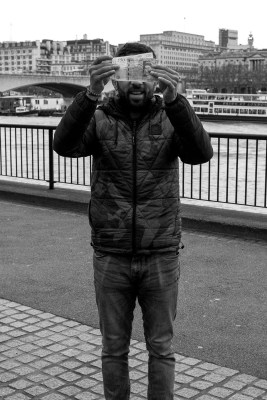
Trying to interest tourists in the shell game on the South Bank in London. © Neil Turner, December 2015

Trying to interest tourists in the shell game on the South Bank in London.
© Neil Turner, December 2015

I almost always carry a camera when I’m out and these days I have to go to a lot of meetings with clients and potential clients – most of which are in central London. There’s always something to see and as I was on my way to a meeting just before Christmas I saw a small group of people trying hard to get passing tourists interested in playing ‘the shell game‘ on the South Bank near the Royal National Theatre.

The idea is simple; one of the group pretending to be a tourist plays the game and wins whilst other members of the group stand around playing the joint roles of lookout and interested bystanders. It took them about ten seconds to realise that they were having their photograph taken and whilst some of them hid their faces the others tried to block my view and make me move on. It was a cold and damp day and they weren’t getting any trade so my presence probably angered them but I stood there, shot some pictures before moving on.

My favourite frame was the attempt that the man actually conducting the game made to hide his face as he approached me to tell me that I wasn’t allowed to take his picture!

Shell game players hides his face with £50 notes on the South Bank in London. © Neil Turner, December 2015

Shell game players hides his face with £50 notes on the South Bank in London.
© Neil Turner, December 2015

Technical stuff: Fujifilm X100S, 1600 ISO 1/125th of a second at f5.6. Converted into black and white in Photoshop CC2015

My iPhone & not taking pictures with it

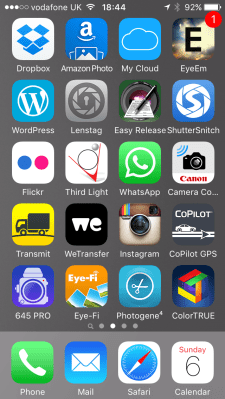
iphone_grabThere’s no getting away from two facts:

1. I am a fan of almost everything Apple for the work that I do and the way that I do it.

2. I rely on my two and a bit year old iPhone 5S for quite a lot of things when I’m out on assignments.

The speed of the 4G network and the brilliant array of apps available for all smartphones has changed the way that I do some of my jobs quite a lot in the last few years. Recently I wrote about getting pictures away quickly  and I have also written about the workflow that I use with some of the phone apps and you can see from a current grab of one of the app pages on my phone I have quite a few ways to do similar things.

I’d like to talk in this blog about some of many of the ‘un-sung heroes’ of my mobile life – at least one of which is a very new and a very, very welcome addition to the set up.

The backbone of my mobile image acquisition and transmission system is formed of the Eye-Fi and Photogene apps which have been covered at length before but you can also see plenty of other work related apps on this single screen. (more…)

Canon 16-35 f4 L IS

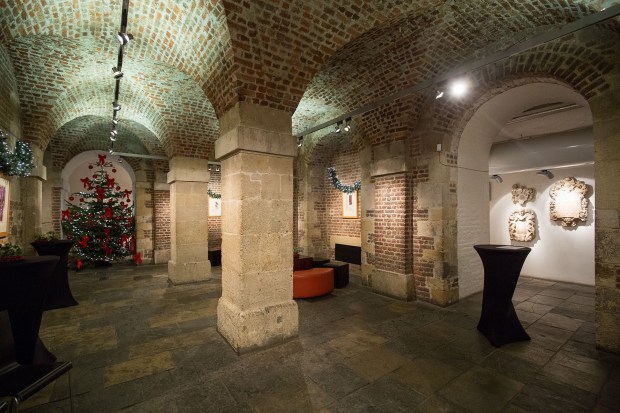
Test shot with Canon 16-35 f4 L IS in the crypt of St Martin-in-the-Fields

London. 08 December 2015 Test shot with Canon 16-35 f4 L IS in the crypt of St Martin-in-the-Fields Photo: Neil Turner

A couple of months ago I cracked and bought the Canon 16-35 f4 L IS lens to replace my very elderly 16-35 f2.8L having borrowed both this one and the f2.8L MkII to see what all the fuss was about. I shoot quite a few pictures of buildings and having a 16mm lens is very useful – especially when the space is really tight.

My old 16-35 and just about every other super-wide lens I have ever used has suffered from barrel distortion, been less than pin sharp in the corners and generally required a bit of work to get great pictures that are as free from distortion as possible.

I was on a job last night in a tight space where the 16-35 f4 L IS was being pressed into service to do shots of an empty venue before an event. I hadn’t brought a tripod because I hadn’t expected to be doing these shots but I did my best with what I had. The photo above was taken hand-held at 1/60th of a second at f4 on 2500 ISO with the IS switched on with a Canon EOS5D MkIII. I have applied no correction to the uprights and the frame is un-cropped at 16mm focal length.  (more…)

What makes this photo a Flickr favourite?

Waiting for people and texting their friends outside the Apple Store, Covent Garden.

Waiting for people and texting their friends outside the Apple Store, Covent Garden. © Neil Turner. November 2015

When I rejoined Flickr a couple of months ago my main aim was to learn the ins and outs of how it works so that I could help an important client build their Flickr profile. One of the side-effects is that I have become quite interested in how and why some pictures get no attention and why some others get loads. This was made all the more interesting when one single picture of mine went from the normal 100-200 views and 2-3 likes to having over 10,000 views and around 130 likes.

I don’t think that it is any better or worse than most of the rest of the (178 and counting) pictures I have uploaded so why did it get so much attention?

I genuinely don’t think that it is because it is a wonderful image so maybe it is because someone influential in the Flickr-sphere decided that they liked it and that prompted their followers to also like it. Maybe it is because I uploaded it on the right day at the right time in the right groups to get so much attention.

The truth is that I don’t know – (more…)

The story behind a picture #3

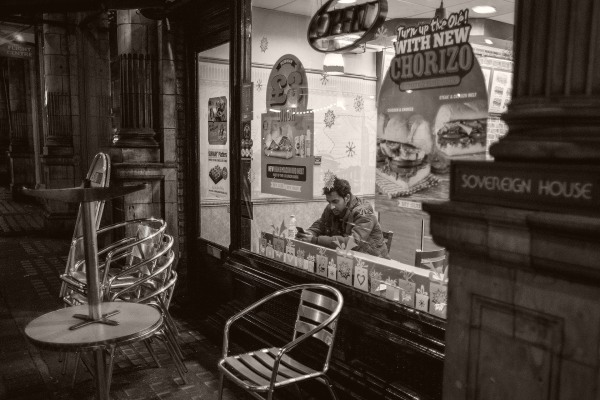
Sitting in the window seat at Subway on Shaftesbury Avenue Photo: Neil Turner Photo: Neil Turner

Sitting in the window seat at Subway on Shaftesbury Avenue
© Neil Turner, November 2014.

This photograph falls into the ‘personal work’ category. I had been to a meeting in central London during the evening and had arrived fashionably on-time having failed to park in my favourite evening parking space near the location of the meeting. That had forced me to park a bit further away. As a result my walk back to my car at around 10.30pm was both longer and much more interesting than usual.

I nearly always have a camera with me and it is nearly always either my Fujifilm X100S or it’s little brother the X20 but on this evening I had a Canon EOS6D with a couple of fast prime lenses and so I shot some photographs of things that interested me as I walked. This shop window – a branch of Subway that stays open until the early hours was the very first thing that caught my eye and I was very interested to see just how good the EOS6D is at higher ISOs. This was shot at 3200 ISO with a shutter speed of 1/250th of a second at f1.8 using a Canon EF 28mm f1.8 lens. For a DSLR this is about as unobtrusive as you can get – the quiet shutter mode is really good and the speed and accuracy of the auto focus on the centre focusing point means that you can ‘snatch’ a frame in really low light with quite a high degree of certainty.

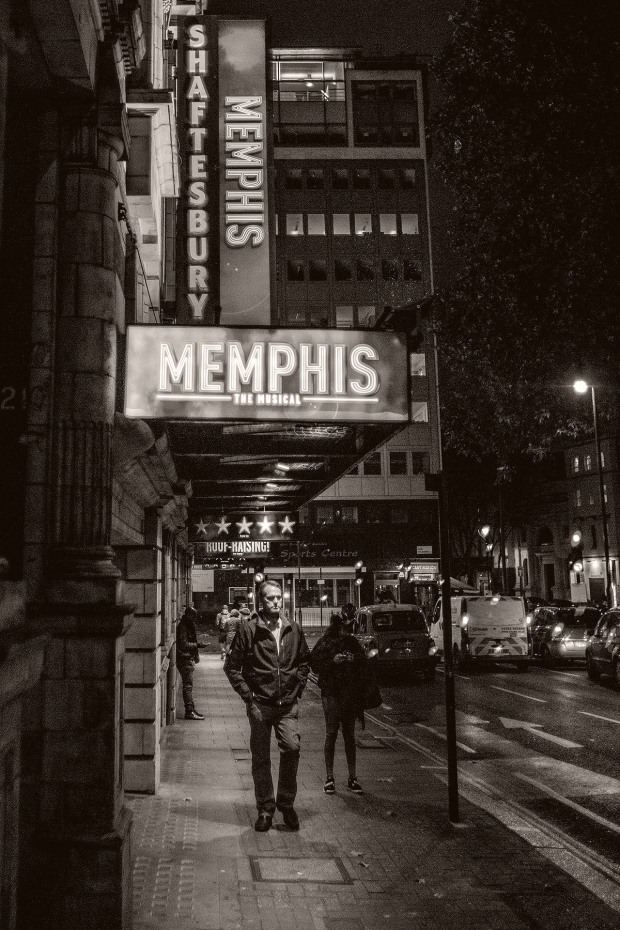
Just around the corner I saw the potential for another nice image with the frontage of a theatre after the last member of the public had left the building. I composed, waited and finally got this frame as a solo pedestrian passed through the frame.

Pedestrian passes under the "Memphis" banner outside a west end theatre at night. © Neil Turner November 2014.

Pedestrian passes under the “Memphis” banner outside a west end theatre at night. © Neil Turner November 2014.

This photograph was also shot at 3200 ISO but was better lit at 1/640th of a second at f1.8. I was actually quite disappointed when I got back to my car and realised that I had a two and a half hour drive home. I knew that I had half a dozen good photographs and I sat in the car and transferred a couple of them to my phone using the camera’s built-in wifi before uploading them to EyeEm and Twitter. Then I drove home…

Getting pictures away quickly

Getting photographs to the client has always been one of the less glamorous aspects of being a professional photographer. From sticking a pile of prints into an envelope and handing them to a courier to scanning negatives before using clunky slow modems to deliver them right up until today’s relatively painless methods nobody in their right mind would list this part of the process as either satisfying or easy.

The arrival of social media and the realisation amongst better clients that using our work rather than their own smartphone snaps has meant that we have had to speed things up a lot. I’ve always liked Eye-Fi cards but more recently I have been working with clients and with projects where something even more reliable and configurable is required. The worst part of it is that there isn’t actually one simple solution or workflow that will satisfy all of them in all circumstances. For a lot of jobs transferring the pictures from the camera to a smartphone or tablet before captioning and shifting them to the client is quick enough and I’ve written about that workflow before. New software appears all of the time and I am always looking at ways to make things smarter and quicker by introducing some automation and cutting steps out.

Live Ingest window from Photo Mechanic 5.

Live Ingest window from Photo Mechanic 5.

(more…)

F4 and be there…

06 August 2015. Bournemouth, Dorset. Close up of part of a Canon 70-200 F4L IS lens. Hillcrest Road

06 August 2015. Bournemouth, Dorset. Close up of part of a Canon 70-200 F4L IS lens.

I’ve discussed zooms versus primes far too many times in far too many blog posts to rehearse the old arguments again and at the end of my recent post about zooming with your feet I mentioned investing in some new gear with a promise to follow it up with a blog post – so here it is.

The great New York press photographer Weegee is supposed to have said “F8 and be there” when asked how he got such great pictures. I’m not remotely interested in the debate about whether or not he actually said it but I am interested in the idea of apertures and, more importantly, maximum apertures.

For as many years as I’ve been shooting with zooms I’ve owned and used lenses pretty much exclusively with f2.8 maximum apertures. (more…)