UK

Best light of the year

©Neil Turner. Fistral Beach, Newquay, Cornwall.

It is almost inevitable that when the best light of the year so far offers up a number of creative possibilities the only camera you have with you will be the one built into your phone. I don’t mind admitting that this has always filled me with dread and I have often missed the picture that I know I should have taken because the phone couldn’t do what a ‘proper camera’ can.

We were away in Cornwall last week for a few days and had just arrived at our hotel after the drive from East Dorset when we decided that a stroll along the beach before dinner was in order. We had been to Fistral Beach many times before but never really experienced the magic of the sunset there and when the light started to dip it was obvious that we were going to be treated to something rather lovely. These days I have an iPhone 7 which has a pretty good camera. I normally use it for snaps, record shots and general visual note-taking but when I needed it to produce the results using it with the 645Pro app allowed me to get exactly what I would have wanted if I’d had my Fujifilm X100S with me.

I was so pleased with the picture that I approached the man who features in it and sent him a copy whilst still on the beach. Photography is still a joy.

The third kit fetish

The Phottix 70cm collapsible beauty dish, adapted to fit an Elinchrom Ranger Quadra head.

Everyone knows about the fetish for camera bags shared by most photographers and anyone who has read this blog will know about my own personal one for card readers but there is a third one that has been exercising me of late. I have mentioned it quite a few times over the years and a particular need to have a repeatable set up has led me down this particular equipment rabbit hole once again.

I’m talking about lighting. I’m talking specifically about light modifiers. Those umbrellas, snoots, dishes, soft boxes and hybrid gadgets that you place on the fronts of your flash units in order to control and improve the light. (more…)

RGB and me

I get involved in a lot of discussions about the finer points of photography both online and in person. One of the most common this year has been the about choosing which RGB colour space we should all be working in. The truth is that there are a number of variables which, between them, should point you in one direction or another. There are plenty of RGB colour spaces but the main two are Adobe RGB and sRGB – mainly because these are the options you have when shooting with most DSLR cameras. There are a couple of others (Colormatch and ProPhoto) that offer wide gamuts and some real technical advantages but, as I hope to explain, this isn’t necessarily helpful. More isn’t just a waste, it’s a potential problem.

Ideal Worlds

In an ideal world we would have cameras, viewing and reproduction systems that gave us every tiny subtle variation in colour that the human eye can see on a good day in great light. We don’t. Yet. (more…)

Moody technique post from the old website

I have been cleaning up some of the behind the scenes stuff on my original dg28.com website and got side-tracked looking at some of the old technique posts (again). I really liked this one from July 2003 which was originally entitled “Choosing a Mood”. Anyway, here is the original post cut and pasted:

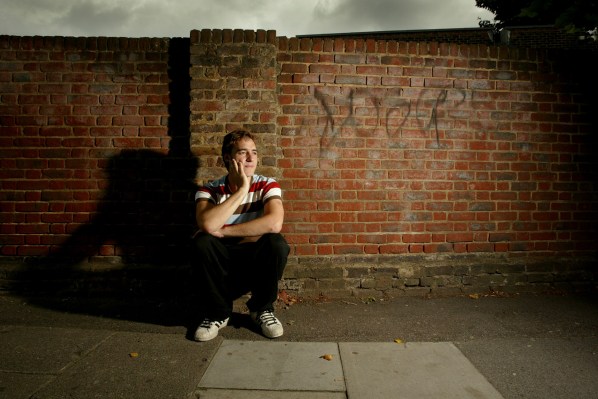
©Neil Turner/TSL. July 2003. English, Media Studies and Philosophy teacher in a north London comprehensive school.

©Neil Turner/TSL. July 2003. English, Media Studies and Philosophy teacher in a north London comprehensive school.

Every time you take a photograph you are saying something about what is in the image. It’s impossible to avoid a frozen frame being anything other than an interpretation of that moment so it becomes a mark of a good photographer to make sure that every element of the image (composition, subject matter and light) helps to paint a consistent story. 

The mood required for every image – especially with portraits – is something that you have to consider very carefully.Some lighting guides will tell you that there is a lighting set up for each mood and that it is a simple matter of placing light A in position B and light C in position D to achieve this. I have to agree that there are some obvious starting points for many of the moods that I use, but there are many other factors that have to be taken into account when setting the scene. (more…)

Seven things to agree on before taking a commission

© Neil Turner, October 2014. Production of John Foster's Shot At Dawn in the Council Chamber at Bournemouth Town Hall.

© Neil Turner, October 2014. Production of John Foster’s Shot At Dawn in the Council Chamber at Bournemouth Town Hall.

Quite a lot the posts that I’ve uploaded to this blog in the last few months have been related to the business side of photography. For those who want more of the old dg28 – your time is coming soon. In the meantime I wanted to post my thoughts on what you should agree with your client before undertaking a commission. This is taken directly from my own outline terms and conditions which are posted on my website. I have absolutely no objection to any photographer copying and/or adapting these seven points for use in their own terms and conditions because, in my opinion, the more of us who do this the more likely it is that potential clients will be used to the concepts and it will require less pushing to get them to negotiate. (more…)

Hands and portraits

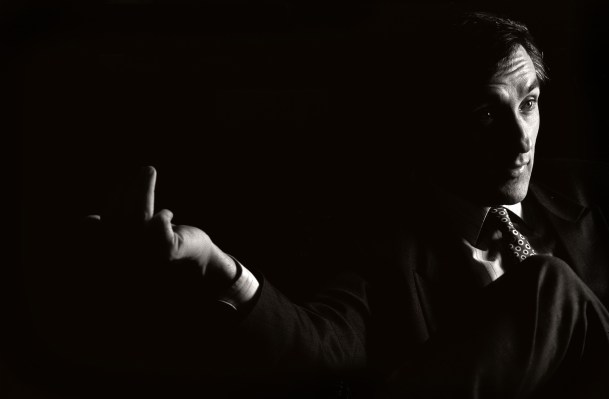
John Redwood MP, photographed during an interview in January 1994. © Neil Turner/Insight.

John Redwood MP, photographed during an interview in January 1994. © Neil Turner/Insight.

It’s January 2017 and like most photographers I am looking forward to the year with a mix of excitement and trepidation. What kinds of challenging and interesting projects are going to come my way in the next eleven and a half months? How is my work going to develop? Am I going to get enough work to pay the bills? Big questions that add to the roller-coaster of emotions that being freelance brings out.

One of the things that I always try to do is look back at some of last year’s work and compare it to older stuff and try to come up with some thoughts that help me to understand my own style better and to make sure that I don’t get tripped up by the same old mistakes. There’s a question that pops into my head about this time every year and it is one that I think that I am finally happy to answer: (more…)

Canon’s flash evolution

When I switched to Canon cameras from Nikon in 1995 the one thing that I missed from my old F4S cameras and my old SB25 flash units was the accuracy and reliability of the Nikon TTL flash. Canon, with all of their promises for the EOS1N and Speedlite 540EZ combination just couldn’t quite match what I had left behind. I have no idea how Nikon managed to get their off-the-film-plane metering to be so good but it was very good indeed.

Coincidentally, it was about this time that I started to use high quality battery powered lights. The Lumedynes that I took delivery of in 1996 changed my professional life and TTL flash became something that I used when I absolutely had to.

Fast forward to 1998 and the arrival of the first decent digital cameras we had (the Kodak DCS520/Canon D2000) and flash took a big backward step. (more…)

Manfrotto umbrella bracket challenge

Photo: Neil Turner

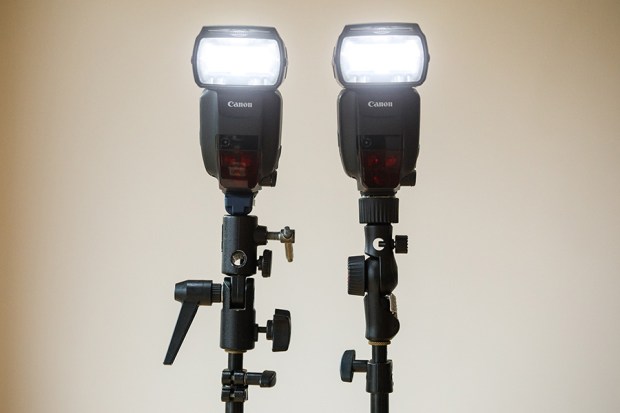
The old Lite-tite on the left and the Snap Tilthead on the right both with Canon 600EX II-RT Speedlites.

When, like me, you have been using a single product successfully for over twenty years it is normally out of a mixture of boredom and curiosity that you have to try out the next “new idea” when you see it. That happened to me a few weeks ago. Having owned and used several of the venerable Manfrotto 029 Lite-tite brackets for so many years I thought that I’d give their new Snap Tilthead with hotshoe a go. For my purposes they will do pretty much the same job: hold a Canon Speedlite flash on a stand with a folding umbrella on those jobs where using other lights isn’t so much of an option. I know that there are dozens of other brands out there but I’m a sucker for certain makes(more…)